Showing posts with label photography. Show all posts

Sunday, May 4, 2014

How to Read Wisconsin Death Trip


The following are reading notes I made for my Dartmouth College course "Raising the Dead," a creative writing and reading course in experimental nonfictions. I teach one of the books that introduced me to the genre, Wisconsin Death Trip, by Michael Lesy, who taught me as an undergraduate 20 years ago. Back then, my classmates at Hampshire College and I were puzzled by the book, enthralled by it. I remain both puzzled and enthralled. First time I taught it at Dartmouth most of my students dismissed it out of hand. "It doesn't make sense," they said. "True," I agreed. "That doesn't make sense, either," they said. The problem, I came to suspect, was that they had little experience with a text without a plot, a text without an argument, a poem that does not look like a poem.

So I made these reading notes, about one of the first images in the book. This horse. The first time we see the horse, we get only the body. Emphasis on the mane. Emphasis on the phallus. Turn the pages, and the whole emerges. How to account for this? There are many possibilities. These are a few of them.


We begin with a horse. Or rather, a cropped photograph of a horse, a picture of part of a horse. Which part? Not the head, not the eyes -- the part of every animal we look to first.

Instead, a dichotomy: the mane and the phallus. The mane, an extraordinary mane, can’t be ignored; the phallus, meanwhile, has been made the focal point by the cropping of the image. So we look first at the mane and tally the obvious: long, white, wavy. Perhaps Rapunzel comes to mind. As for the phallus, there’s nothing so whimsical; just the fact of it.

In the text that follows, Lesy alerts us to his interest in archetypes. So we can read his cropped photo, his selection, in “traditional” terms: the mane is the feminine, the phallus is the male.

If that seems too simple, too reductive—as it should—just wait.

We read the introduction. We learn that there will be photographs of horses because the photographer, Charles Van Schaick, was paid to take photographs of horses. We learn that the photographer’s intentions were banal; at least, the ones he knew about. We learn that Lesy believes we have more intentions than we know about.

Then we turn the page, past the big numeral one—and again, the horse. Same picture. Right side of the page. Just the horse and nothing but the horse and not even the whole horse. Look at this horse! says Lesy. Because, after all, it seems to be a remarkable horse.

I mean, have you ever seen a horse like that?

“The thing to worry about,” Lesy has just told us, “is meanings, not appearances.”

Perhaps you, like me, are worrying about meanings. Perhaps you’re worrying, looking at this strange horse, that you don’t get it.

So you turn the page.  Ah! The whole horse. The horse depicted as a horse should be depicted, standing in profile, its most wonderful feature – that mane! – restored to its proper place as the focal point of the image, no longer in tension with the phallus. Now we know where to look and how to read the picture.

Nice horse. 

But what’s with this horse on the next page? 


Cropped, again. (In the book, we see just the body.) The whole head chopped off. (A horse head? The Godfather?* When did that come out? To Wikipedia: 1972. And Wisconsin Death Trip? 1973. Is it possible? That connection? But to what end? The horse head: chopped off. A warning?)

What’s left: Ribs. A reflection of the white horse’s mane, a photo negative. The glorious flamboyance reflected as bone against flesh. Mortality. Lesy’s told us what to look for: Life and death. Here we have it.

Turn the page. (Same image, cropped even tighter.) Closer now, the ribs, mortality, death, but the “camera” – Lesy’s cropping, our gaze – moves, up toward the head, almost to the head, almost to the eyes. Almost but not quite. Almost to the eyes looking toward the text, the page, our destination. Our eyes move there; we complete the horse, become the horse, the horse’s ribs become our ribs, the white horse’s mane our beauty, and now we’re in, animal observers of the stories that follow.

But how to read these stories? NOT STRAIGHT THROUGH. You’d die of terror or boredom or numbness. It’s worth paying attention to the title: A death trip. The drug allusion is deliberate: The book is a product of its times even as it stands outside of normal time. Now, I know none of us have any experience with mind-altering drugs, but we’ve seen the effects in the movies, so we know the experience isn’t linear or even narrative, precisely.

It may help us to turn to the definition of the “lyric essay” offered by Deborah Tall and John D’Agata, champions of the form: “Lyric essays forsake narrative line, discursive logic, and the art of persuasion in favor of idiosyncratic meditation. . . . [The lyric essay] might move by association, leaping from one path of thought to another by way of imagery or connotation, advancing by juxtaposition or sidewinding poetic logic.”

“Sidewinding poetic logic.” A poetic logic by which we give attention to repetition and pattern; a sidewinding logic in which we look for these patterns not by plowing from A to B to C but by jumping from A to K to G.

In other words, read enough of Wisconsin Death Trip straight through to start picking up patterns; then start jumping around.

And I do mean jump around – that means you jump backwards as well as forwards.

But all along, you're paying attention to the text to which Lesy calls our special attention. The passages of his writing – the full page italics, the conclusion, the boxed prose poems of themes in various years – and the passages of his commentators, as defined in his introduction.

The clippings are just that, clippings, no more no less. Read them, but not all of them; mark them not for information but for the moment when juxtapositions begin to make sense.

ONE LAST PIECE OF ADVICE: Return to the pictures. That’s the death trip. Note Lesy’s manipulations, his commentary in the form of line drawings. Don’t try to decode them; try to inhabit the pictures and the mind of this strange person, “Michael Lesy,” who has gathered them for us.


* You may be wondering what The Godfather is. That’s ok. That’s how allusion, intended and accidental, works: not by directing us only to texts we’re familiar with but by sending us off toward texts we don’t know, by developing a context, a landscape. It’s ok if we don’t catch all the allusions. They’re just there. Or they’re not.

Thursday, December 16, 2010

David Shields, Reality Hunger, 2010; Milton Rogovin, Portraits in Steel, 1993

I've been slowly reading David Shields' recent book Reality Hunger: A Manifesto for awhile now. I'm not sure if I recommend it -- I keep reading out of annoyance as much as pleasure. I've decided to try blogging it, a reasonable response, I think, to a book that is comprised of 618 numbered quotations related to the question of fiction vs. nonfiction. Or maybe simply fiction/nonfiction. I'm sympathetic to the not-very-new idea that it's difficult to draw a sharp line between genres, and I'm grateful for many of Shields' selections, but I'm bored by the book's cleverness (the quotations are only identified in an index he says his publisher forced him to include) and dismayed by the tired old conventional wisdom of "art" masquerading as genre-bending transgression.

But I can't stop reading. So I'm going to start taking notes on the the entries I find most provocative, starting with #45*:
"After Freud, after Einstein, the novel retreated from narrative, poetry retreated from rhyme, and art retreated from the representational into the abstract." In the margin I wrote, "glib & false." What bothers me in this statement, representative of a tone throughout the book, is the definite article: "the novel." 
Such grandiose statements remind me of the singularity with which some fundamentalists speak of gay people: "the gay man," as Pastor Ted Haggard used to say, before his regular male escort outed him as one. For Ted, the definite article elevated his enemy; for champions of the novel, the definite article elevates their sense of themselves as at the center of the only conversation about fiction worth having. The novel doesn't exist; only novels, many of which remained firmly committed to narrative.

#47** galls me for a similar reason.
"I listened to a tour guide at the National Gal'ery ask his group what made Rothko great. [Various possibilities follow.] The tour guide said 'Rothko is great because he forced artists who came after him to change how they thought about painting.' This is the single most useful definition of artistic greatness I've ever encountered." 
To which I responded in the margin: Each entry sillier than the last. Their problem is the distraction of "great."

But thinking on it now, I realize I'm disqualified from judging this commentary, since I don't believe there can be a "useful definition of artistic greatness." Such a definition isn't very useful, since it can only be definitive in the cliquish imagination of those who accept it. "Imagination" is perhaps too generous a word for those who cannot conceive of art beyond the world in which Rothko looms large. Poor Rothko; held captive by little minds for which size really matters.

#62*** concerns Brian Fawcett's Cambodia: A Book for People Who Find Television Too Slow, which, in my youth, was a book for young men who wanted young women to know that the A&P -- that'd be Art and Politics, capitalized -- left them no time for anything less than maximum sexual and romantic intensity. Nonetheless, Fawcett can't be blamed for this remark about his book, in which the top two thirds the pages are filled with fiction about media consumption and the bottom third features an essay on the Cambodian genocide:
"The effect of the bifurcated page is to confront the reader with Fawcett's point: wall-to-wall media represent as thorough a raid on individual memory as the Khmer Rouge."
Why stop there? How about: "TV, lacking greatness, represents as thorough a destruction of humanity as Auschwitz." Or: "Pop stars who aren't quite trashy enough for me to celebrate ironically represent as complete an assault on our ears as the machetes of the Rwandan genocidaires."

See, that's the great thing about insisting on no distinctions between fiction and nonfiction: you're free to draw on both in the service of literal idiocy at once.

#65****, on the preferred genre label of these bold pioneers, the "lyric essay":
"In fiction, lyricism can look like an evasion, special pleading, pretension. In the essay, it's apparently artistic, a lovely sideshow to The Real, that, if you let it, will enhance what you think you know."
I believe this is from an advertisement for a penis pump called The Real.

#72***** More on the lyric essay.
"What happens when statistics, reportage, and observation in an essay are abandoned for image, emotion, expressive transformation?"
The short answer, of course, is easy: kitsch. But I'm also reminded of a comparison my friend JoAnn Wypijewski once drew between the photographs of Milton Rogovin and Sebastio Selgado, both of whom set out to document the lives of workers. Selgado's work looks like fashion photography: it is lush, beautiful, lyric -- "a lovely sideshow to The Real, that, if you let it, will enhance what you think you know."

Pretty, no? Get that bit in the center, where the nameless worker looks almost like he's on a cross?

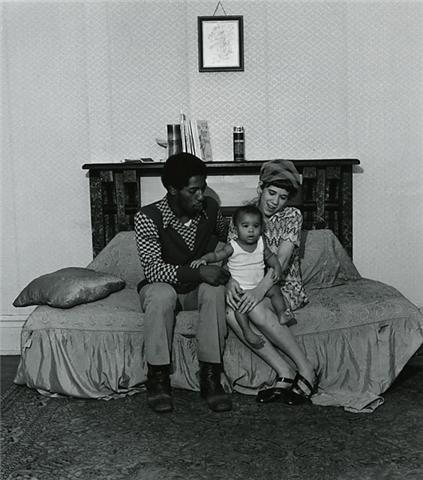
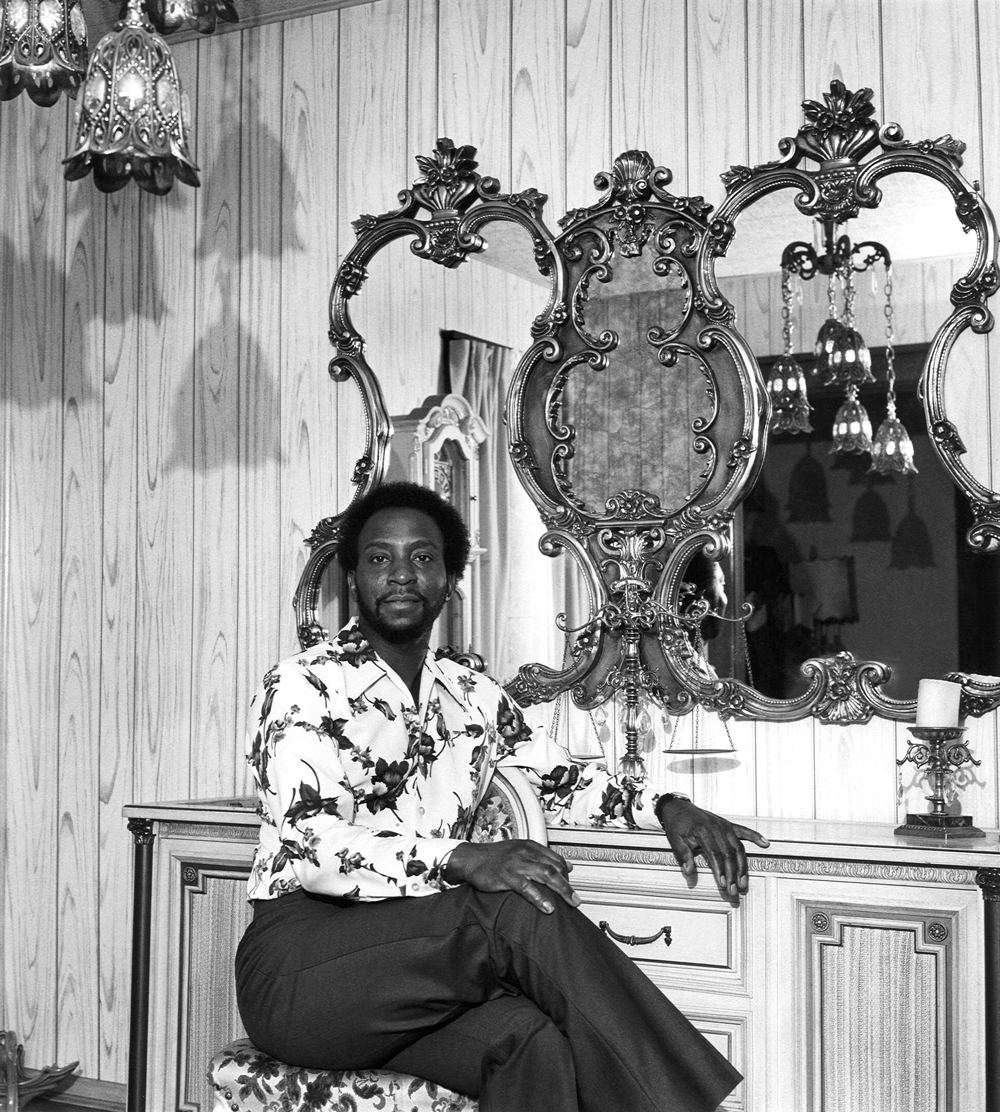
Rogovin, who recently turned 100, has been taking pictures in his adopted hometown of Buffalo, New York, since 1942. My favorite book of his is Portraits in Steel, images of steelworkers whom he has come to know over decades. Each is photographed at home and at work, and many are interviewed, as well. The steelworkers collaborate in their portraiture, especially at home, where many pose with favorite items. Yes, they "pose," but there is nothing artificial about the process. Each pose, for that matter, might be considered a form of reportage, on the part of the worker, and of observation, on the part of Rogovin, more truthful than the capture of brutal elegance on display in Selgado. Here is a sample that gives only a limited sense, since most of these images are stripped of their companions and their identifying details. Even so:


* Shields thinks citations are a distraction from Art. I don't, but I've tried to give his book a fair shake by commenting on his commentaries without immediately identifying their source, as his wish. In the index required by his publisher, he provides some scant bibliographical data, with the caveat that he "forgot" some it "along the way." Shields suggests you cut all of it out of the book. He presents this notion as a rebellion against the ownership of art (why, then, attach his name to the book at all?), but it strikes me more as an evasion of the specificity he seems to believe would reduce his Art to the lowly status of information. Here, then, is as much information as he could bring himself to provide: #45 is taken from Lorraine Adams, "Almost Famous: The Rise of the 'Nobody' Memoir,"Washington Monthly. Shields doesn't include such trivia as dates, for what hath Time to do with Art?

**The source of #47, on Rothko, is unidentified.

***Likewise #62. Just as well. The asshole who thought it witty to equate big media with actual murder is probably left unnamed.

****I was wrong. The source for #65 is Ben Marcus, "The Genre Artist," The Believer.

*****The source for #72 is lyric essayist John D'Agata, though Shields doesn't distinguish whether this quote is from D'Agata's anthology, The New Essay, or from Shields' conversations with him, also mentioned as a source. I happen to be reading D'Agata's About a Mountain right now, too, which has raised some related questions I'll have to blog tomorrow or the next day, after I've moved on to the passages from Reality Hunger about which I have sweeter things to say.

Wednesday, May 16, 2007

Stephen Shore, "American Surfaces," 1969-79

Some images from Stephen Shore's "American Surfaces." I saw this exhibit yesterday, bought the book, and wish I could stare at it for a couple of days. Shore is often associated with Walker Evans, who also took deadpan portraits of ordinary places and people, and Andy Warhol, with whom Shore got his start and who evidently influenced his sense of pop and the beauty of the banal. Comparisons with Robert Frank are also made, but to less effect, I think -- Frank was a romantic, and I don't see that in Shore. He doesn't seem to be looking for hidden magic and secret symbols in the landscape, as Frank was. Rather, I think he's trying to relearn langauge. These pictures remind me of kid's ABC book. Shore's ABCs are a lot more complicated, but not mystical -- they're in the open, there for anyone who wants to look.