Monday, December 21, 2009

The Family and Uganda's "Anti-Homosexuality Bill"

I spoke to Andrew Harmon of The Advocate, America's oldest LGBT magazine, about the Family and Uganda. Writes Andrew:
With mounting international pressure on Uganda to table the Anti-Homosexuality Bill, even key members of the Family — the secretive evangelical group with extensive links to Capitol Hill that has dominated headlines in recent weeks — has spoken out against the draconian legislation authored by one of its own Ugandan members.

Whether the plea falls on deaf ears is unclear. But passage of the bill could mean death sentences for gays and lesbians in one of Africa’s most homophobic countries — as well as severe restrictions for nongovernmental organizations working to combat HIV/AIDS in the region.

A near-nightly subject of cable news programs led by MSNBC’s The Rachel Maddow Show, the Family has cultivated relationships over decades with Ugandan political leaders, ostensibly in order to export its brand of fundamentalism to the developing nation. David Bahati, a Ugandan politician and the author of the bill, is a Family member who organizes the Ugandan equivalent of the U.S. National Prayer Breakfast — the latter being an annual event that’s become a staple of Beltway politics and has been attended by every sitting U.S. president since 1953.

With the bill currently before a Ugandan parliament committee, Jeff Sharlet, author of The Family: The Secret Fundamentalism at the Heart of American Power, talks to Advocate.com about why some Family members have spoken out and why President Obama should finally stare down the Christian right by skipping the yearly prayer event that President Dwight D. Eisenhower hoped would never become a tradition for sitting presidents.

You can read the rest of the interview at Advocate.com.

Sunday, December 20, 2009

The Family and Taiwan

Since I've decided to make this blog a sort of record of "outtakes and bonus materials" to The Family (at least for the time being), I'm keeping my eye out not just for documents from my archives but for news from the world that illuminates the function of the Family. In that regard, I'm recommending this post on the Taipei Prayer Breakfast, by the brilliant religion blogger Richard Bartholomew:

...as with “prayer breakfasts” in other countries, the event was useful to all concerned; the political leader gets a boost, while the church leaders get a national pulpit:

The sermon in Taiwanese was delivered by Rev. Hsiao Shiang-hsiu, who reminded the audience through his sermon that God wanted Taiwan to become a country that loved justice, mercy, and peace. He also lauded President Ma’s moral integrity and urged him to continue leading the country in the way of righteousness.

It should come as no surprise that the Republic of China has a strong relationship with the Family, which has always provided a veneer of piety for U.S. allies on the front lines of any struggle -- in this case with China. A 1942 Fellowship pamphlet titled "Finding the Better Way" explained that God worked not democratically but through powerful individuals, noting, "In China, a single indiviual in a post of authority, Chiang Kai-Shek, has done more to Christianize that heathen country than thousands of equally sincere but obscure fellow worshippers." (This pamphlet can be found in the periodicals section of collection 459 at the Billy Graham Center Archives.) The Fellowship worked to build relationships with Taiwanese politicians over the year, but it wasn't until the 1960s that the effort started paying off. In 1965, the Fellowship's German leader, Gus Gedat -- a prominent writer and public speaker who at the beginning of the Nazi regime had tried to "find a synthesis between the new party and Christianity" -- toured Taiwan on a goodwill tour. It evidently worked. A Fellowship briefing (the term "Family didn't come into usage until the 1970s) for members of congress associated with the movement, by then-Rep. Al Quie (R.-Mn.), dated December 12, 1966, notes that Taiwan -- along with Indonesia and Seoul, two other Cold War allies -- has instituted regular Fellowship prayer meetings for Taiwanese politicians. (folder 2, box 362, collection 459, BGCA)

On October 5, 1967, Fellowship leader Senator Frank Carlson (R.-Ks) writes to Taiwanese contacts that Vice Admiral William E. Gentner, Jr., Commander of the U.S. Taiwan Defense Command, has sent a "report" informing the Fellowship that "you [the Chinese] are perhaps ready for a Presidential Prayer Breakfast with your great leader Generalissimo Chiang Kai-Shek." Carlson asks that all accommodations be made for the Fellowship's "field associate" for Asia, who will be coming to Taiwan to meet with national leaders. "This service will be deeply appreciated." (Folder 16, Box 365, Collection 459, BGCA).

On October 21, 1968, Fellowship leader Doug Coe requests from Chiang Kai-Shek (along with Ferdinand Marcos, Heilee Selassie, and Napolean Alcerro, an accessory to the Honduran dictatorship) a special congratulatory letter for the new Brazilian dictator General Costa e Silva, who'll be presiding over Brazil's new Fellowship Prayer Breakfast despite the fact that he's Catholic. Coe makes these requests through "key men." In France, for instance, the key man responsible for organizing support for the dictator is Jean Fernand-Laurent, who had distinguished himself before the war by pressing for anti-Semitic Vichy-style reforms before the Vichy government had even taken over. In Taiwan the key man is businessman John K.C. Liu, president of the United Orient Corporation, a member of the "international planning team." Liu doesn't come through -- Chiang Kai-Shek wants to send a proper letter instead of a cable, and it won't make it in time. (I believe this document is located in folder 1, box 183, collection 459, BGCA.)

A tape recorded message to Fellowship members dated January 4, 1971, by Doug Coe and Fellowship field associate Clif Robinson, tells of meetings with the leadership of South Vietnam, Cambodia, Indonesia, and Taiwan. Reports Robinson: "We went to meet American Ambassador Walter McConaughy, a model of the way a diplomat of responsible trust can also become a part of this message. A unifying force, a catalyst for God. ... then to the head of the head of the state bank of China, comparable to Federal Reeserve, a man who was so completely open to the concept... with John Liu taking responsibility in a personal way... Secretary General of what we would call the Security Council. Full session middle of the day, the generalissimo and all the others were there. Felt awkward walking up that red carpeted stairway, ushered into next room, Secretary-General gave his gavel over to another man to come out and spend time with us. Said 'I think what we’re doing in this room is far more important than what we’re doing in this other room.'"

Robinson, who believed that the Fellowship should fight a sort of spiritual guerrilla warfare in S.E. Asia, got more excited as he spoke of meetings with Cambodians and Vietnamese. "As men go, and BECOME a part of this LIVING outreach of the unknown, of this living God that we know, God that we know but he’s part and parcel of the great God beyond him, not two gods, not three gods, not 1000, One! We know a little bit, we have seen a little bit of him and what we've seen we want to throw our lives away on behalf of... And so as we do this we don’t do it in the POWER of men. We don’t, don't do it because we have a program that WORKS. We don’t do it because ....Who can we send? Who can we have to go to Manila? Who can we have to go to Saigon? Who can we have to go to Jakarta? We’ve only got this man and this man and this man who knows the score. Isn’t that sort of ridiculous. I believe that somehow GOD has got his men who knows the way. ... This is where we come in... WE must pray into being THIS LIVING MESSAGE. The Word become flesh. Maybe the man doesn’t have to go from the United States to Manila. Maybe he needs to go from China [Taiwan] to Manila. Or from Manila to China. Maybe there’s already somebody right there... just waiting for this RELEASE of spiritual ENERGY that in some mysterious way has been committed to OUR keeping. We can unlock it if we will..." (tape 109, collection 459, BGCA)

The March 1971 briefing for Fellowship-linked members of congress, sent by Senator B. Everett Jordan, a North Carolina segregationist Democrat notes advances in the overseas Prayer Breakfast circuit, with the U.S. military producing 1,400 prayer breakfasts, simultaneous with the main event in Washington and "including all units in South East Asia" -- treated to tapes messages from President Nixon and Defense Secretary Melvin Laird, on the "moral and spiritual values which undergird our way of life." These same sentiments, reports Jordan, found foruns in Fellowship prayer breakfasts in South Korea, the Philippines (again, Marcos), and Taiwan, where Vice-President and Premier Dr. CK Yen had begun working with Liu on an event to simultaneously pray for Nixon and Yen. (Folder 2, box 363, collection 459, BGCA)

In late 1980, Doug Coe wrote Liu, then in the National Assembly of the Republic of China, that he would be dispatching Senator Sam Nunn (D.-Ga.) to meet with him. (folder 2, box 411, collection 459, BGCA).

And so the relationship continued. The most recent dispatch from behind-the-scenes came in 2000, when Sara Fritz, an Asian correspondent, reported for the St. Petersburg Times on the Taiwanese connection. I'm pasting in her article, dated April 10, 2000, below in its entirety, a fine example of reporters doing what reporters are supposed to do:

Not even prayer breakfast immune from power game

When voters in Taiwan recently elected a leader of the opposition party as their president, they also may have dealt a blow to a traditional Washington ritual: the annual National Prayer Breakfast.

What, you may ask, do the Taiwanese have to do with the National Prayer Breakfast? The answer is money. In past years, Taiwan's long- ruling Kuomintang (KMT) party has been a major financial backer of the prayer breakfast and many other such events in the United States.

The party contributes to the prayer breakfast as part of an unpublicized, but highly effective effort to maintain Taiwan's influence with Washington politicians. The KMT's strategy was developed after then-President Richard M. Nixon broke off formal diplomatic relations with the tiny island nation in the early 1970s.

In addition to funding the annual prayer breakfast, which is usually attended by the president and hundreds of members of Congress, the Kuomintang also has funded numerous travel junkets for politicians in Taipei and celebrity-political events, such as the annual Danny Thompson Memorial Golf Tournament in Sun Valley, Idaho, and the annual festival of the Very Special Arts organization founded by Jean Kennedy Smith.

For their donations, Taiwanese officials get to participate in these functions, where they can rub elbows with influential U.S. officials who are not easily accessible to a country that does not have formal diplomatic relations with the United States.

After the annual prayer breakfast earlier this year, for example, Hsu Shui-teh, president of the Examination Yuan in Taipei, boasted to reporters that the event allowed him to have a private chat with President Clinton.

These strategic acts of charity by the Taiwanese have been so successful, in fact, that rival Chinese leaders in Beijing have in recent years tried to use a similar strategy to develop friendships with influential people in Washington. Their copy-cat strategy is surprising when you consider that Beijing enjoys full diplomatic relations with the United States.

Most of the people who attend the prayer breakfast apparently don't know about the Taiwanese connection, which I first learned about several years ago while interviewing KMT leaders on an assignment in Taipei.

I was told the Taiwanese ruling party's contribution in 1997 was $10,000. At that time, prayer breakfast organizers refused to confirm it, saying only that prayer breakfast financial records are not available to the public.

When I began to inquire about these matters again recently, I received a telephone call from a man who identified himself as a volunteer press spokesman for this year's prayer breakfast in February. He said he did not know how the prayer breakfast was funded, but he doubted it had received Taiwanese support.

"I can't imagine a foreign political party making a contribution to the National Prayer Breakfast," he said. He promised to check into the matter and get back to me. I never heard from him again.

Nevertheless, Taiwanese support for the prayer breakfast and other charitable activities could come to a screeching halt when President- elect Chen Shui-bian takes office May 20. Chen's Democratic Progressive Party (DPP) does not have the vast financial resources of the KMT, which is said to control bank accounts containing billions of dollars.

"We are not as rich as the KMT; KMT is the richest party in the world," conceded I-Chung Lai, director of the DPP's office in Washington.

Lai said that while DPP leaders recognize that the KMT's generosity to institutions and causes in the United States has been good for promoting Taiwan's interests, some things may have to be curtailed. He said his party would review all such contributions as part of the transition of power from KMT to DPP.

"We have to reassess how effective and appropriate they are," Lai said.

Of course, winning has been good for the DPP treasury. Many Taiwanese business executives who once supported the KMT have begun making contributions to the DPP, according to Lai. Contributing to the winner is a political tradition in every country - East and West.

My purpose in writing about this matter is not to lament the potentially precarious funding of next year's National Prayer Breakfast, or any of the other causes that receive Taiwanese support. In fact, I assume that if the Taiwanese withdraw their money, other groups will fill the void.

I am interested in the funding of the National Prayer Breakfast primarily because I think it reveals the double-edged nature of virtually everything that happens in the nation's capital. Nothing that goes on here - not even something as worthy and other-worldly as a prayer breakfast - is completely divorced from the influence game.

Saturday, December 19, 2009

"Politicians and the Underground Prayer Movement," LA Times, 1974

Defenders of conventional wisdom occasionally respond to The Family by asking, "If this group has so many powerful friends, how come we pundits have never heard of it before?" Perhaps because you weren't paying attention. I'd love to say that I'm the first person to break this story, but I'm not. In 2002, the Los Angeles Times ran a long front page story by Lisa Getter linking the Family to Central American death squads, outing Family associates such as Rep. Bart Stupak, Senator Jim DeMint, and Senator Sam Brownback, and revealing the group's secrecy policy. Not long after that, AP journalist Lara Jakes Jordan reported on the Family's C Street House. Reach back further into the press morgue -- easy enough to do now with Proquest -- and we find coverage of the Family and its secretive ways in Time, the Washington Post, and even Playboy, which in the early 1970s published an exhaustive investigative report focusing on the group's policy of making off-the-books loans to congressmen.

And then, every now and then, there was a positive story, such as this January 1974 column for the L.A. Times Syndicate by Nick Thimmesch. What's remarkable about this piece is that's positive not despite the Family's lack of transparency but because of it.

Below are some excerpts, followed by a few other documents for context. Emphases are mine. The original draft of this article is available in folder 8, box 102, collection 275 -- the papers of Watergate felon and Christian Right leader Charles W. "Chuck" Colson -- in the Billy Graham Center Archives.


Politicians and the Underground Prayer Movement

by Nick Thimmesch

Washington – This city is often cynical, and it can be vicious and merciless, too. But there is an “underground” movement here, spurred by Watergate, which might surprise some of our jaded folks when it shows results in the future. It is the growing inclination among troubled souls here to find serenity and strength through belief in God.

Now this kind of statement can cause even more cynicism, and loud guffawing as well. I know. Particularly when the story broke that Charles W. Colson, the White House’s one-time tough guy and wheeler-dealer, said that “I have found in my own life the relationship with Christ.” Colson might have found God, but it will be a long time before many here will believe it.

It is more believable to learn that two other Watergate figures, Egil (Bud) Krogh, indicted for the break-in of Daniel Ellsberg’s psychiatrist’s office, and James McCord, convicted in the Watergate burglary, have both gone through profound spiritual experiences.

Anyway, Colson, Krogh and McCord now regularly counsel and pray with other so-called “big” men in this town who have also gone through trials of the spirit. These are usually highly successful political, government and executive figures who woke up one day in middle age to discover their lives were empty and that, in reality, they had earned little or no respect from their associates, their wives and families.

They meet in each other’s homes, they meet at prayer breakfasts, they converse on the phone. They are a brotherhood in belief; are slow to accept quick “believers”; are secretive and guarded in discussing their experiences or activities. Unlike most public figures here, they genuinely avoid publicity. In fact, they shun it.

It appears Colson’s story broke by accident. Long troubled over the way his life had gone, and the way he had become involved in high-powered dealings here, Colson sounded out a friend who was deep into the prayer movement [According to Colson's memoir, Born Again, it was actually Family man and CEO of defense contractor Raytheon who sounded Colson out.] Soon, Colson was invited into the home of a prominent congressman and met others there, including Sen. Harold Hughes of Iowa, the anti-war liberal, whose story was made public many years ago…

… The men who go through spiritual ordeals often meet at prayer breakfasts, and wish there wouldn’t be so much publicity about the National Prayer Breakfast, which features the President of the United States, foreign dignitaries and other celebrities. It looks like affected holiness under “the big tent.”

“I don’t spend more than five hours’ times in preparing for it,” says Doug Coe of the Fellowship Foundation of Washington, who quietly helps groups form their own prayer breakfast groups.

“It is only one-tenth of one per cent of the iceberg and doesn’t give a true picture of what is going on.”…


Colson, to whom I devote much of a chapter in The Family, went on to serve less than a year for his Watergate felony, at which point he was paroled into the Family's care, which wrote the warden that he was needed for religious work. Senator Harold Hughes was waiting for him. It was a friendship that startled many, since on most issues Hughes was liberal. He was also a sentimental man, mostly oblivious to the details of allegations against his Family friends -- the Filipino dictator Ferdinand Marcos was another subject of Hughes' spiritual and political patronage -- and a deeply religious one for whom divine law, as he understood it, trumped the law of the land. Another column by Thimmesch, "Why Hughes Shocked Liberals" (by breaking with Democrats and many Republicans to reject a sense of the Senate motion against more Watergate pardons), includes this nugget, which can be found in folder 7, box 102, collection 275 of the Billy Graham Center Archives:

Hughes voted “nay” because he feels that the Senate has no business even implying to any President that he doesn’t have, “in his own wisdom and conscience, the final decision-making process rightfully guaranteed to him by the Constitution, and actually going back in history coming from divine inspiration, or granting mercy to those he may deem proper to receive that mercy.” Amen.

Wednesday, December 9, 2009

The Family, Joe Pitts, and Abortion

This fall, anti-abortion activists cheered for the Stupak-Pitts Amendment -- or, the Pitts-Stupak Amendment, as Rep. Joe Pitts' office called it. The amendment nearly derailed health reform and threatened to roll back abortion rights. In Salon, on NPR's "Fresh Air," MSNBC's "Rachel Maddow Show," and in other venues I reported on the Family's relationship to the amendment. Representative Bart Stupak has been enjoying subsidized rent at the Family's C Street House since at least 2002. Rep. Pitts' relationship goes back much further, to the late 1970s. Pitts didn't respond, but Stupak has been vocal in denying any connection between the Family, which he characterizes as apolitical, and anti-abortion activism.

The following letter, from Family organizer Fred Heyn to Pitts -- then a state legislator and national anti-abortion activist -- and an associate, Glenn Cunningham, is just one of the many documents contained within the Family's archives that prove Rep. Stupak wrong. It can be found in folder 8, box 386, collection 459 of the Billy Graham Center Archive. It represents the early days of Pitts' anti-abortion activism through the Family.

September 2, 1980

Dear Joe and Glen,

The dinner at the Cedars [The Family's $4 million Arlington mansion] recently with you and your invited guests was a great pleasure. We appreciate the way in which you are working together and, although as a fellowship we do not officially become involved in issues, we're grateful when men like yourselves take the leadership on a national issue as important as the one on which you're working. We pray for you and God's leadership in the days ahead as you work on it.

Also, Doug Coe, Stu and I have visited and we are agreed to help with this work as much as we're able.

Thanks again for being here and for including us...

Yours Sincerely,
Fred Heyn

Friday, July 10, 2009

Jeff Sharlet, The Family, 2008


"Just when we thought the Christian right was crumbling, Jeff Sharlet delivers a rude shock: One of its most powerful and cult-like core groups, the Family, has been thriving. Sharlet's book is one of the most compelling and brilliantly researched exposes you'll ever read -- just don't read it alone at night!"
--Barbara Ehrenreich, author of Nickel and Dimed, Bait and Switch, and Dancing in the Streets

From the bookjacket:

They are the Family—fundamentalism’s avant-garde, waging spiritual war in the halls of American power and around the globe. They consider themselves the new chosen, congressmen, generals, and foreign dictators who meet in confidential cells, to pray and plan for a “leadership led by God,” to be won not by force but through “quiet diplomacy.” Their base is a leafy estate overlooking the Potomac in Arlington, Virginia, and Jeff Sharlet is the only journalist to have written from inside its walls.

The Family is about the other half of American fundamentalist power—not its angry masses, but its sophisticated elites. Sharlet follows the story back to Abraham Vereide, an immigrant preacher who in 1935 organized a small group of businessmen sympathetic to European fascism, fusing the Far Right with his own polite but authoritarian faith. From that core, Vereide built an international network of fundamentalists who spoke the language of establishment power, a “family” that thrives to this day. In public, they host prayer breakfasts; in private they preach a gospel of “biblical capitalism,” military might, and American empire. Citing Hitler, Lenin, and Mao, the Family's leader declares, "We work with power where we can, build new power where we can't."

Sharlet’s discoveries dramatically challenge conventional wisdom about American fundamentalism, revealing its crucial role in the unraveling of the New Deal, the waging of the Cold War, and the no-holds-barred economics of globalization. The question Sharlet believes we must ask is not “What do fundamentalists want?” but “What have they already done?”

Order yours now.

ADVANCE PRAISE FOR THE FAMILY:

"Of all the important studies of the American right, The Family is undoubtedly the most eloquent. It is also quite possibly the most terrifying. This story of a secretive and unmerciful church of 'key men' goes way beyond Jesus Christ, CEO—it's Jesus Christ, lobbyist; Jesus Christ, strikebreaker; and maybe even Jesus Christ, fuehrer."
--Thomas Frank, author of What's the Matter with Kansas?

"Forget what you think you know about the Christian Right; Jeff Sharlet has uncovered a frightening strain of hidden fundamentalism that forces us to revise our understanding of religion and politics in modern America. A brilliant marriage of investigative journalism and history, an unsettling story of how this small but powerful group shaped the faith of the nation in the 20th century and drives the politics of empire in the 21st. Anyone interested in circles of power will love this book."
--Debby Applegate, winner of the 2007 Pulitzer Prize for biography for The Most Famous Man in America: The Biography of Henry Ward Beecher

"Jeff Sharlet has an incredibly rare double talent: the instincts of an investigative reporter coupled with the soul of a historian. He has managed to infiltrate the most influential and secretive fundamentalist network in America, and ground his reporting in the most astute and original explanation of fundamentalism I've ever read."
--Hanna Rosin, former religion reporter for the Washington Post and author of God's Harvard: A Christian College on a Mission to Save the Nation

"A gripping, utterly original narrative about an influential evangelical elite that few Americans even know exists. Jeff Sharlet's fine reporting unveils a group whose history stretches from the corporate foes of the New Deal to the congressional lawmakers who gather each year at the National Prayer Breakfast. The Christian Right will never look the same again."
--Michael Kazin, author of A Godly Hero: the Life of William Jennings Bryan

"The organization of influence these men constitute may remind readers of a Rotary Club—but it is a Rotary Club equipped with nuclear weapons. When the Family's members say 'Let us pray,' they are not just making a suggestion."
--Michael Lesy, author of Wisconsin Death Trip

“Un-American theocrats can only fool patriotic American democrats when there aren’t critics like Jeff Sharlet around -- careful scholars and soulful writers who understand both the majesty of faith and the evil of its abuses. A remarkable accomplishment in the annals of writing about religion.”
--Rick Perlstein, author of Nixonland: The Rise of a President and the Fracturing of America

"Jeff Sharlet is one of the very best writers covering the politics of religion. Brilliantly reported and filled with wonderful anecdotes, The Family tells the story of an influential group that you haven't previously heard of, and need to know about."
--Ken Silverstein, Washington editor of Harper's and author of The Radioactive Boy Scout

“I was once an insider’s insider within fundamentalism. Unequivocally: Sharlet knows what he’s talking about. He writes: ‘Our refusal to recognize the theocratic strand running throughout American history is as self-deceiving as fundamentalism’s insistence that the United States was created a Christian nation.’ Those who want to be un-deceived (and wildly entertained) must read this disturbing tour de force.”
--Frank Schaeffer, author of Crazy For God: How I Grew Up As One Of The Elect, Helped Found The Religious Right, And Lived To Take All (Or Almost All) Of It Back

“The Family offers the reader an astounding entrée to a fascinating Christian network unknown to most Americans. Jeff Sharlet has managed to peel back the curtain and reveal an elusive organization that wields an unsettling amount influence over our country’s lawmakers as well as business and political leaders worldwide. The Family is a must-read for any American who wants to know who is actually pulling the strings at the highest levels of power.”
--Heidi Ewing, co-director of Jesus Camp

“Jeff Sharlet provides a fascinating account of how part of American Christianity has gone off on a dangerous tangent. It should worry everyone -- maybe especially those of us who understand the Gospels to be a call to help the powerless, not prop up the powerful. In the last few years evangelicals have begun to reconsider their automatic support for the status quo; The Family will help accelerate that important renewal.”
--Bill McKibben, author of The End of Nature and The Bill McKibben Reader

"The author of that Harper's piece is the fearless and fantastically talented Jeff Sharlet, who just came out with a book about [the Family]. I can't recommend the piece or the book strongly enough."
--Noam Scheiber, The New Republic

Friday, February 6, 2009

Spring Books

Some good friends are publishing some great books this spring. As it happens, they're all about bodies, dead, alive, or yet to be born.

I blurbed Peter Manseau's Rag and Bone: “Dry bones dance in Rag and Bone, as Peter Manseau brings death to life through his fascinating exploration of religious relics: the skull fragments, detached digits, and ashes of the holy. This is a book that might have been written in the 15th century just as easily as now, but we're lucky to have here the unique 21st century voice of Manseau--a Yiddish-speaking, Buddha-curious son of a Catholic priest and a nun--and one of the most peculiar and most entertaining travelogues in years.”

I also contributed a jacket blurb for Kathryn Joyce's Quiverfull: Inside the Christian Patriarchy Movement:"'Prairie muffins,' hayrides, and babies -- lots of babies -- don't sound like the stuff of fanaticism, but in Quiverfull Kathryn Joyce brings us the news from the most militant frontier of fundamentalism -- a 'patriarchy movement’ of right-wing women who embrace a caricature of 19th century womanhood as a strategy for culture war. At turns funny, terrifying, and heartbreaking, Quiverfull is a necessary book, an empathetic and brilliant analysis of how this small group of believers shape mainstream ideas about motherhood, marriage, sex and gender.”

Then there's Ilana Stanger-Ross's Sima's Undergarments for Women. I've heard and read little bits and pieces of it over the years, but I'm eagerly waiting for my copy like everyone else before I can say anything substantive about it. In the meantime, though, I'm happy to report that Entertainment Weekly gives Sima an A-.


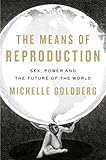
Here's Michelle Goldberg's second book, The Means of Reproduction: Sex, Power, and the Future of the World. I know Michelle through her reporting on Christian fundamentalism, so I was glad for the opportunity to read an advance copy of her new work, which, as the subtitle suggests, is big in scope. Here's the blurb I contributed: The Means of Reproduction is a bold and vital book, a story about life and those who twist that word to front for agendas of sexual control around the world. We're lucky that we have Michelle Goldberg, a brilliant and clear-eyed journalist, to bring us news of how the struggle over reproductive rights has gone global, as the American Right teams up with reactionary forces abroad. Goldberg calls it one of the most important fights of our time; after you read The Means of Reproduction, you will, too. A landmark book."

I notice I used "brings the news," a cliche to begin with, in two different blurbs. Don't hold that against the books.

Last, latest, and, admittedly, least, is Believer, Beware: First Person Dispatches from the Margins of Faith, selected by the editors of KillingTheBuddha.com -- that is, me, Manseau, Paul Morris, Laurel Snyder, Meera Subramanian, Ashley Makar, and Marissa Dennis. I say least only because this is an anthology as opposed to a new piece of work, although there are several new essays in it. The book began one night when I was avoiding work on my most recent book, The Family. Instead of pushing through to a deadline, I stayed up til dawn reading through the hundreds of essays published on KillingTheBuddha.com since Peter and I founded it with designer Jeremy Brothers back in 2000. I came up with a rough draft of a manuscript, then let it sit for months -- until a new crop of editors -- Meera, Ashley, Marissa, and now Nathan Schneider -- resurrected the webmagazine and grabbed hold of the manuscript's first draft, ready to make it real. To round out the book -- which includes terrific work by established writers such as Bia Lowe, Timothy Tyson, Rebecca Donner, and Steve Prothero, and new stars such as Irina Reyn, Danielle Trussoni, and Laurel Snyder -- we rounded up several new essays -- including Meera's "Banana Slug Psalm," Jeff Wilson's "Barbershop Dharma," Mark Dery's "Jesus is Just Allright," my "The Apocalypse is Always Now," Manseau's "Revelation Road," and, my most favorite of all, Quince Mountain's "Cowboy for Christ," a tale of transgendered Bible camp. Here's a sample:

Just like the cowbois in the more interesting queer porn mags, I wore leather chaps and carried a rope everywhere I went. These should have been clues, but I was oblivious to my slant. Perhaps many otherwise curious adults are too horrified to partake in such pleasures, are not ready to see in themselves what they’ve been told is perverted. I know I was spared for a long time from self-effacement or self-denial largely because of my ignorance of such terms as flogging, caning, BDSM, power play, FemDom, and the like. I didn’t know a schoolboy scene from a shoe fetish, and was thus free to engage in all manner of erotic indulgence.

Until the one of the deacons caught me lavishing Whitney’s bare and salty beltline as she leaned back against a pile of sweaty saddle blankets polishing leather in the tack room, I was quite free, indeed. During the ensuing interrogations, I publicly denied any kind of sexual interest in girls (What?! She’s like a sister to me—my sister in Christ!). I recounted my devotion, my service, their lack of solid evidence. The director, who called me out on the back barn porch and addressed me with his arms crossed, could hardly prove a longstanding sexual relationship. Still, my welcome at Bible camp was clearly limited to the end of the summer at best.

Privately, I had to agree with the director. I held up my desires to the holy light of God’s word and, yes, they were out of line with His will. I may have failed as a camp wrangler, but I could get right with God.

When Whit and I left the camp without plans to return, we didn’t tell our friends we’d been caught getting it on in the barn. We cited frustration with transient staff and milky sermons. We said we wanted community; we craved meat and potatoes. So the following summer—after I finished high school and Whit dropped out of missionary school—we moved to Whit’s hometown, where we joined an even more conservative church. That’s what I needed in order to be the God-fearing woman I was meant to be: more rigidity...

Monday, January 19, 2009

Joss Whedon and James Marsters, "Spike," Buffy the Vampire Slayer


The new season of Battlestar Galactica just launched, and Lost will soon be found again. There’s even another Flight of the Conchords coming. To prepare, I returned to the source of the new golden age of television: Buffy the Vampire Slayer. I re-watched season five. After Lost, the pacing seems positively stately, with impossibly long scenes for TV. Buffy's still much better writing about, you know, human beings, but the flab within it, the exchanges that are simply pedestrian means of transporting us onto the next interesting moment, is more visible. And yet, Buffy was a deeper character study than even that of Tony Soprano. The Sopranos was brilliant right to the end, but it stopped seriously developing its characters after the fourth season. By then, we knew all we were going to know; what remained was to watch Tony and his associates come to the same realization.

Buffy creator Joss Whedon and his writers (and actors) not only created truly complex characters, but also truly complex people. There was no end to their "development," because there was no end to their lives (until, of course, there was).The character who interested me most in this regard as I re-watched Season 5 (and parts of the subsequent seasons) was the absurdly vain vampire Spike (James Marsters), a cartoon bad guy to begin with who slowly claws his way out of the grave of cliched villainy. Of course, Spike was created to be the most interesting character; but the first time I saw Buffy, back in re-runs on FX years ago, I resisted. Like most nerdboys, my favorite character was Willow, the nerd-witch; but the most interesting character to me was Tara, her shy, clumsy girlfriend. Spike was just too obvious.

Or so I thought. Now, I think Spike may be the emblematic character of the new golden age of television, a character who simultaneously embodies the limits and the possibilities of sequential drama on a small screen.

In season five, we see Spike becoming more and more infatuated with Buffy. He puts a blonde wig on half a mannequin, dresses it up in a turquoise top, and begins developing a relationship. In episode 11, he buys a box of chocolates and practices presenting them to the mannequin in preparation for an apology to Buffy, for revealing to her that her human boyfriend, Riley, is cheating on her with vamps. He imagines her response, and answers; imagines another response, and snaps at her; again, and he smashes the chocolates over the mannequin’s head.

The scene presents a subtle mockery of Buffy and of television. Spike has no difficulty imagining Buffy’s predictable responses; his angry retorts are those of the show’s writers pushing back at the conventions of TV drama. But they’re also signaling a more interesting development. Spike, the buffoonish bad boy, both understands Buffy well enough to play her part in his mind and hates this impotent knowledge enough to react with psychotic rage. Viewers seeing the episode with no knowledge of the show’s future might have thought, “cute, weird, and foreboding.” And all three adjectives are on the mark, but not as one might expect.

Well, one might expect that Buffy and Spike are bound for romance. And they are. But it’s not going to be as simple as the TV conventions Spike tries to smash. Yes, he makes an effort at being a good vampire, but it never really works. He’s not a good vampire. He’s the bad boy character. Granted, in a less imaginative show — The O.C., for instance -- the bad boy would turn out to be misunderstood and fundamentally noble. But the Buffy/Spike romance will evolve because Spike’s essential wickedness reflects Buffy’s resentment of her responsibility as the slayer and what we are told are the “dark” sources of her powers. Spike is Buffy’s dark side – “the monster in the man” – as Spike tells Riley, the now-displaced good guy boyfriend.

And yet, their romance is real. That’s what makes Buffy, the show, brilliant – Joss Whedon and co. don’t try to defy convention, they dive into it and come out the other side in a weird world where Spike and Buffy can be lovers, a world so strange that it’s more familiar than anything else on television. The Spike and Buffy pairing doesn’t simply mimic emotional truths we all know in greater depth in our own lives, it adds to our store of knowledge about the human condition.

“The human condition,” with its echo of disease, is an especially apt phrase for what drives Spike to woo Buffy and to respond with demonic anger when he fails to win her. It’s not that he’s a caricature, but rather that he’s rusty – it’s been 100 years since he actually was human. Like Anya, the vengeance demon who becomes mortal so she can be with nerdy Xander, Spike is learning how to be human. Not how to feel – he already does that – nor how to crush his feelings into conventional expression, but to express his feelings within the conventions of human behavior, the genre confines of being a person, without reducing them to clichés. The result is a bad boy who, when he finally does make a noble sacrifice at the end of the series, surprises us – astonishes us – with a goodness that was in no way predictable, nor even quite explainable. It’s neither in character nor out of character; it’s the irreducible complexity of free will exerting itself within the structure of a story.

(Counterpoint: Jaime J. Weinman, writing in Salon, thinks Spike ruined the show, by becoming its Fonzie.)

Sunday, December 30, 2007

Whitney Balliett, American Musicians: 56 Portraits in Jazz, 1986

Among the dead of 2007 is Whitney Balliett, a longtime jazz critic for The New Yorker. When I read Adam Gopnik's obituary of Balliett, I remembered that I knew one of his sons, Jamie, at Hampshire College. Jackie Mason described the senior Balliett as "the Waspiest guy I ever met," and I'd say the same for Jamie, in the best sense. Born into privilege -- his wedding would make the NYTimes "Vows" column -- he responded to the world with quiet generosity and gentle curiousity. I don't think I realized before our fourth year of college -- we weren't friends, just passing acquaintances -- that through his father Jamie knew many, if not most, of the day's jazz giants, that as a boy he'd sat in on drums with musicians I was just learning in college to revere.

My reverence, though, was shallow -- I've never much felt jazz. I understand why the best of it is amazing, but "understanding" is not the stuff of a real response to music, and so my interests went elsewhere. Still, when I heard that Whitney Balliett had died, I decided to track down one of his collections. I could have bought it on Amazon, but I wanted to find it in a bookstore. That proved difficult, and soon I forgot about it.

Then I read in my alumni magazine that Jamie was very ill. That day, I walked into a used bookstore in Rochester, NY, and without looking for it found American Musicians: 56 Portraits in Jazz, by Jamie's father. At first I was disappointed -- the writing seemed hagiographic, too genteel, even, at times, trivial. Balliett doesn't begin his pieces as a critic but as a broad-minded fan, presenting facts he's learned about his heroes and long quotes from other sources. But that's all part of his polite style. When he finally comes to the music, he's astonishing. Here's a passage about trombonist Jack "Big T" Teargarden I liked so much I typed it out to get a better sense of Balliett's observational power -- unpretentious, precise, and driven by delight. I'm posting it in memory of a writer I've only just discovered and in the hope that his son's health returns.
Teargarden had several different tones: a light, nasal one; a gruff, heavy one; and a weary, hoarse one -- a twilight tone he used for slow blues, and for ballas that moved him. He had a nearly faultless technique, yet it never called attention to itself. Opposites were compressed shrewdly in his style. Long notes were balanced by triplets, double-time spurts by laconic legato musings, busyness by silence, legitimate notes by blue notes, moans by roars. Teargarden developed a set of master solos for his bread-and-butter tunes -- the tunes that his listeners expected and that he must have played thousans of times: "Basin Street Blues," "A Hundred Years from Today," "Beale St. Blues," "Stars Fell on Alabama," "St. James Infirmary," "I Gotta Right to Sing the Blues," "After You're Gone." Each time, though, he would make generous and surprising changes -- adding a decorative triplet, a dying blue note, a soaring glissando -- and his listeners would be buoyed again. Sometimes he sank into his low register at the start of a slow blues solo and rose into his high register at its end. Like his friend and admirer Bobby Hackett, he stayed in the bourgeois register of his horn, cultivating his lyricism, his tones, his sense of order and logic. Teargarded was a good jazz singer. His singing, a distillation of his playing, formed a kind of aureole around it. He had a light baritone, which moved easily behind the beat. The rare consonants he used sounded like vowels, and his vowels were all pureed. His vocals were lullabies -- lay-me-down-to-sleep patches of sound.

Monday, November 5, 2007

"Junky Fried Eggs"; Ozick's "Entrails"; Ask the Dust; Mike Gold; Rocketship; Middlemarch (again)

I am the weasel that bites into its prey long after it's dead.

So says Mr. Ditty, in response to my "unused syllabus" a few posts below. Mr. Ditty -- Noahjohn -- has been one of my favorite writers since I met him at college 17 years ago. I thought he was hands-down the most interesting writer in a class that included several who've gone on to publish a great deal -- le thi diem thuy, Joshua Beckman, and me among them. I'm a big fan of thuy and Joshua, too, but Noahjohn's stories were the rawest, the funniest. They were accidentally "experimental," almost always sentimental, often exaggerated, and never less than true. Noahjohn did a stint for a small town newspaper after college, but then he returned to Florida to teach; and now he teaches in North Carolina. But he's thinking about writing again. His subjects, he suggests, may be his own life, Mars, and the occult -- a redundant list. To rev himself up, he's posted a couple of his old memoir stories on a blog called, unjustly, "Mediocre Ramblings." Here's my favorite: "Junky Fried Eggs and Lady Fingers."

***

Another friend I haven't seen in a long time has also started a blog: Of América: Roberto Lovato on Dreaming Beyond the Walls of Civilization.

Start with this post, an NPR interview with Roberto about Latino politics after Gonzalez.

***

O, Cynthia Ozick!

Such is my comment on Ozick's latest essay, "Literary Entrails," published in the April Harper's, read by me more recently. Such exclamation points, simultaneously ironic and earnest, a signal of a superior mind's resignation to the bustle of reality, are part of Ozick's rhythm. "A coterie!" she writes, mocking Lionel Trilling. "Spiritual ancestors! Posterity!" The question is, did Ozick discover the utility of exclamation points on her own, or does she borrow the point from Saul Bellow, whom she so reveres that she speculates that while another Bellow may be in the infant stages at this very moment, it's also possible that another 200 years will pass before such a genius bestrides the literary world. Bellow was a great exclamation point user, which is perhaps why his fictional alter egos were always running into trouble with the brutes, the Chicago savages, whom they often adored and feared. The brute bashes the exclamation point because it fails the test of authenticity on three levels: it is ironic, it is earnest, and it is enthusiastic.

O, Ozick!

***

When an editor calls and tells me some story I've been working on for a few months is set to run, I go out and buy myself a new book as a reward. John Fante's 1939 novel Ask the Dust was my reward for publication last spring in Rolling Stone of a story about a fundamentalist youth movement called BattleCry. I bought the book, I'm ashamed to admit, at the Astor Place Barnes & Noble, which is not only a chain store, but a branch of a chain store that once attempted to ban me for life after the manager took offense at a reading Peter Manseau and I gave from our book Killing the Buddha. Even more shamefully, I bought Ask the Dust despite the fact that it boasts an introduction by Charles Bukowski. I'm no fan of Bukowski, but that's not the point; what I resent even more is the Bukowski industry, the stamp of gritty authenticity his name is meant to provide for the legions of semi-punk kids who read nothing but Bukowski because he's "real" -- as if a thousand writers haven't drunk themselves stupid and/or lyrical.

But what does this have to do with Fante? All too much, as it turned out. I bought Ask the Dust because I'd heard Fante was brilliant, and because the first two paragraphs were funny and unadorned:
One night I was sitting on the bed in my hotel room on Bunker Hill, down in the very middle of Los Angeles. It was an important night in my life, because I had to make a decision about the hotel. Either I paid up, or I got out: that was what the note said, the note the landlady had put under my door. A great problem, deserving acute attention. I solved it by turning out the lights and going to bed.

In the morning I awoke, decided that I should do more physical exercise, and began at once. I did several bending exercises. Then I washed my teeth, tasted blood, saw pink on the toothbrush, remembered the advertisements, and decided to go out and get some coffee.

That may be the high point of the book. Or rather, it's even keel -- Fante hits that note perfectly and holds it for a couple hundred pages. I stopped reading thirty pages before the end. There'd been a lot more coffee and self-deprecatory bravado, as well as misogyny polished to a high sheen and the roaring anxieties of the writer/anti-hero's ego crashing against the rocky shore of publishing. Along the way other hard-luck characters ambled through the pages, but Fante can never leave his anti-hero for long enough to fully develop any of the sideshows. Maybe he'd plead the logic of character -- his anti-hero narrator is so self-obsessed, how could he really get anyone else? I'd buy that if I hadn't seen it done, by Frederick Exeley in A Fan's Notes, his memoir/novel about being a deeply neurotic, almost violent, self-obsessed, failing writer.

Exeley came along decades after Ask the Dust. Fante wrote from the 1930s, and I can't help wondering whether his popularity isn't due to desire of depoliticized critics for working class grit lit unburdened by the radicalism of that period. Literary types ever since have insisted that literature can only be political if it's ambiguous, as if ambiguity can't become as didactic as the plainest proclamations of proletarian literature.

***

I much prefer Mike Gold's Jews Without Money (1930) to Fante's narcissism. Gold was the golden boy of proletarian lit, derided ever since as didactic, blunt, and unimaginative. Blunt, yes; but there's nothing didactic about his thick description of not just poverty but the political feelings that sometimes grow from it. And to call Gold unimaginative is to say that the world isn't worth imagining. Much of Jews Without Money is a curiousity cabinet strapped into a car without brakes, a catalogue of sights and sensations and sentiments spun through the mind of a child narrator. It's no Call It Sleep, but that's a good thing -- Roth is overrated, a brilliant stylist so narcissistic that his communism -- his broad social politics -- tied him up in knots for decades, while Gold's freed him to write simpler, less innovative prose that nonetheless will survive longer than Roth. Says me.

***

Here is where books survive:

Or maybe it's where they go to heaven. This is the El Ateneo book store in Buenos Aires. Nothing has made me want to have learned Spanish more than this bookstore.

***

My favorite comic book store is called Rocketship, on Smith Street in Brooklyn. It is to comic book stores what Grocery and Saul are to the Smith Street restaurant scene -- so snobby that it's out of place even on the street of the yuppies. But justifiably snobby -- it's simply better than the rest. So much better, in fact, that I used to feel guilty buying super hero comic books there -- Ed Brubaker's Daredevil, Brian Bendis' New Avengers (both of which I've given up on -- talented writers spread too thin). I felt as if I should be buying the experimental graphic novels and collections of obscure early 20th-century comics stacked up on the recommended table. Then, one day I was furtively buying Buffy the Vampire Slayer (not so furtively -- all geeks know Joss Whedon is a genius) when the owner suggested World War Hulk. World War Hulk? Seriously? Yes, seriously. "I love it!" she said. "He's so angry it scares me!" I bought it. Eh. But now I'm freed to buy super hero comics without shame. Which brings me to Joss Whedon's Astonishing X-Men #22, or, the death of Scott Summers. That, technically, is a spoiler, though the cover art by John Cassady of Summers floating in space as if crucified on Dali's cross, his Cyclops goggles occupying the foreground of the frame -- drifting away from his corpse -- should not leave anyone confused.

I hope he's really dead. Whedon has already portrayed death as well as I think I've ever seen it done on tv with an episode of Buffy called "The Body." The death of Cyclops, a character who goes back to the 1960s, may be another step in Whedon's exploration of character assassination. Cyclops' death, foretold on the cover, isn't even the main storyline of the comic -- after forty years of pulp, he gets just a few pages in the end. Contrast that with the melodrama of Captain America's murder this past spring, so significant that The New York Times had to take notice. I'm more interested in this death-in-passing. Melodrama is what one expects for the demise of the secularized gods of super hero-dom; but this incidental death seems more in keeping with the logic of super hero stories, in which characters are always alienated from the normal emotions of the world by their powers. They're apart; and they die apart. In Captain America, that means opera; in Joss Whedon's X-Men, it means loneliness.

***

Now I'm reading Middlemarch, which has already displaced Wuthering Heights as my new favorite novel. Wuthering Heights, after all, was like a comic book; Middlemarch is what novels would be in a smarter world. It's Moby-Dick for grown-ups, its plot meandering between observation and philosophy that's half-baked and over-cooked and strangely spiced. I'm only 400 pages into the book, so I won't say more. My wife, meanwhile, says I'm becoming a matron -- over the course of the past summer I went from tough guys like Mike Gold and John Fante to Emily Bronte and George Eliot. I think I'd be content to remain in the world of 19th century novels for awhile. I tried reading Pynchon's Vineland while we were on vacation in just that territory, but I couldn't get past the jokes -- he seemed to want his readers too much. Eliot didn't want readers, I think; she simply knew they would be there. And so I am.

Monday, October 15, 2007

Print Inventory: Simple Machines, Musical Illusions, Stellar Kim, Magic Tricks, Disinformation, Boys of Her Youth

An inventory of new and new-ish books ordered, received, or merely contemplated:

Laurel Snyder has published her first full book of poems, The Myth of Simple Machines:


The cover reminds me of the first time I met Laurel, when Peter Manseau and I went through Iowa City on our Killing the Buddha book tour. We knew Laurel through her online work for KillingTheBuddha.com, which began, I think, with her Yom Kippur prayer, "To Pardon All Our Fucking Iniquities." Laurel put us up, guided us through a blizzard to find novelist Marilynn Robinson's church-basement Bible-study, courageously waded into a dogfight from which we cowered, and strongly recommended James Thurber's The 13 Clocks, the brilliant Marc Simon cover of which -- the one Laurel's new cover brings to mind, in style if not subject -- I can't find online. I've been friends with Laurel since, have written for her, published her, and have heard her read from her first chapbook really of poems, Daphne and Jim: A Choose Your Own Biography in Verse. Sound like a terrible idea? Consider the possibilities: "For a bird's eye view of the death of the sixties, turn to page 20. To follow Jim to Norway on snowshoes, turn to page 5." It's not a gimmick. Well, yes, it is, but one that transcends the gag. In Daphne and Jim Laurel does something unusual with parent biography, using the form of a children's literary experiment (Thurber should clue you in that Laurel loves children's literary experiments) to consider seriously choices made and not made, the lives her parents might have led and might have preferred, and her own repetition of their mistakes, wrong turns, and lucky chances.

But enough about Daphne and Jim; the event of today is the beautifully-titled, beautifully-jacketed Myth of Simple Machines, which I will have more to say about when my copy arrives.

***

I'm also eagerly awaiting my finished copy of Alex Rose's The Musical Illusionist, to which I contributed a blurb after reading it in galleys: "The Musical Illusionist is literally marvelous, a curiosity cabinet of wonders and conundrums and mechanical miracles. Alex Rose sets his discussion of impossible cities, absurd mathematics, and books of weird science in the Library of Tangents, and for that he'll be tagged as in the tradition of Borges. But he's no Borges; he's Alex Rose. 'The world repaginates,' writes Rose, and so it does with this splendid collection of stories."

You can get it on Amazon, but better to go directly to its small press publisher, the excellent Akashic Books, which describes itself as "reverse-gentrification of the literary world."

***

The annual Best American Short Stories series might be described as full-speed ahead gentrification, but this year's edition features an inspired choice of an editor in Stephen King, a cranky, bitter, smarter-than-you'd-think, not-quite-as-smart-as-he-thinks kind of guy who doesn't give a damn for propriety. My review of the table of contents bears out King's angry introduction, in which he rails against the relegation of short fiction to journals filed at foot level in big box store bookshelves: Although I've read novels by several of the contributors, I managed to get through 2006 without reading any of these stories. Now I've corrected that oversight by one: Stellar Kim's "Findings & Impressions," brought to my attention by the presence of Stellar herself in the cabin closest to mine at the MacDowell Colony this past September. This is her first published work, which makes it all the more impressive a departure from the maudlin self-therapizing that afflicts so much contemporary fiction. Some notes I made on first reading it:

Told from the perspective of a middle-aged single dad widower radiologist (narrative broken up as if he's filing a report), about his formation of a friendship and abandonment of a patient consumed by cancer. Story begins with the patient's breast on a plate, progresses to a mid-treatment backyard party at her house, to his withdrawal from the friendship – veering toward relationship – to her death. At first I thought the story was simply a very fine technical exercise – a manipulation of emotion in a classic situation, the sterility of medicine contrasted to the grind of grief. But then I realized that the radiologist is a more complicated character, that Stellar has threaded through his account undercurrents of more subtle grief, and vanity. The radiologist tells the patient he has to back off because his son can’t stand to lose a mother figure so soon. (This is how the patient learns that she’s likely to die.) That’s true, in part, and reveals the incompleteness that’s now part of the whole of the man.

But it’s also a lie, and the patient knows this. The only other relationship the radiologist has had since his wife's death in a car crash is a brief, mostly sexual liaison with a lingerie model. Not his ordinary speed, he tells us, but looking back the reader remembers that his dead wife was a TV reporter, glam and blonde. He’s lying, to us and himself, for a variety of reasons, not the least of which is a physical vanity of which he's ashamed. But then, that brings us back to grief – his son, Nick, staring at his mother’s blonde replacement on the TV news, trying to figure out how to get to her in the box. The radiologist’s memory of her has been split in two, the body of the model and the human-ness of the dying patient. He rejects both. The model returns to the Sunday advertising pages; the patient goes to the grave. The radiologist is left with nothing but "findings."

***

When I left MacDowell, Stellar and some of the other residents (they're called, unfortunately, "colonists") gave me as a present two Jesus books (in irony) and, in mockery (gentle, I think) of the fact that when I was a boy I once went to "magic camp," Magic Tricks & Card Tricks, by Wilfrid Jonson (1950). I'm not sure if you could learn how to do a magic trick from Jonson's casual, digressive narrative, but his asides are surely more valuable than his instructions for "The Flying Dime," "The Afghan Bands," or the intriguingly-titled "Patriotic Balls."

"We think it is time to speak to you now about
PATTER,"
writes Jonson, "the words a conjurer uses when he is performing, which are not always so unconsidered as they may seem. There is a fashion at the moment, a fashion which we think is on the wane, for conjurers to be also comedians or, at least, for conjurers to attempt also to be comedians, for many of them are very sad comics.... A century ago people would flock to see anything that was marvellous, anything they could not understand. The few conjurers of the time, in spite of the profound limitations of their technique, had no difficulty in holding the attention of their audiences, to whom their tricks were astonishing and inexplicable mysteries, and they presented their feats seriously. Then came the twentieth century, with its scientific revolution, to produce a public surrounded always by inexplicable mysteries and satiated with marvels.... We mention all this to reassure you. It is not necessary to be a comedian to be a conjurer."

***

Books received, not cared about:

Denis Johnson, Tree of Smoke, FSG's big fiction entry for the fall: first 40 pages filled with sentences stolen from DeLillo, their serial numbers sanded down. I'm probably in a very small minority in believing that Johnson's most interesting work isn't this doorstop or his legendary short stories, but his nonfiction.

John Gray, Black Mass: Apocalyptic Religion and the Death of Utopia, FSG's heavyweight nonfiction entry. Declaring the death of utopia is like announcing the end of history, a neocon habit Gray, a British philosopher, rightly mocks. But he's lost in the thickets of American religion, a major concern of the book: Philosophers almost always fail to deal with that subject adequately, since they depend primarily on secular filters for their accounts of traditions biased toward experience.

Jonathan Lethem, Omega Man, a comic book. Oh, sadness: the author of best writing about kids and comics ever -- Fortress of Solitude can't write comics themselves. Back, Lethem, back! To the pages of black letters in neat rows, images implied only. Comic books should be simple. Like Mike Mignola's B.P.R.D. series, my favorite comic book right now. Monsters! Friendly mummies! Wendigo! Tragedy, starkly drawn.

***

"Broward County, Florida," a nonfiction story Peter Manseau and I wrote for Killing the Buddha: A Heretic's Bible, lacks a Wendigo, but there is a monster, a (sad) mummy, and tragedy, starkly drawn, which is perhaps why it appealed to Russ Kick, editor of the Disinformation series, the latest volume in which is Everything You Know About God is Wrong: The Disinformation Guide to Religion. Kick is heir to Adam Parfrey's "Apocalypse Culture," but he's less interested in the purely bizarre than in work that's sneakily subversive. Besides our "Broward County" -- which can fairly be called sneaky, since we worshipped at full volume with a church bent on murder and then wrote about the horror, theirs, ours, maybe God's -- there's good stuff from the little-known Sex Life of Brigham Young, Mark Twain's anti-religious rant, and work by comic book polytheist Neil Gaiman.

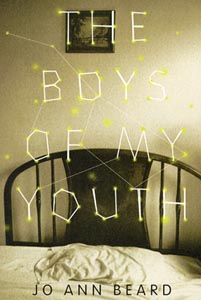
I make the "honorable mention" list in David Foster Wallace's Best American Essays, 2007 for my November 2006 Harper's story, "Through a Glass Darkly," but I can't complain since it's a pretty good list, and led off with a new essay I'd missed by Jo Ann Beard, "Werner." Not online, unfortunately, so I'll have to sit around the bookstore cafe reading it, since I'll be spending my money on a new copy of her only book, The Boys of My Youth, published nearly ten years ago. I've loaned it out twice since, and lost it twice.


(Reward for safe return. No questions asked.)