Got to talking awhile back with some students about a Wallace Stevens poem mentioned in Michael Herr's Dispatches.
* * *
Below is the Wallace Stevens poem Herr alludes to on p. 107 of my edition of Dispatches -- the last line before section IV of "Khe Sanh." It's called "Anecodote of the Jar."As for some of the other mysterious terms -- Tet, Dien Bien Phu, etc. -- some of you may have had that in high school history, others can learn all they need by context (Tet = the moment when every sane person understood the war would never be won; Dien Bien Phu = the moment when the French, before the Americans, were biblically defeated by their own vanity, plus overwhelming numbers).
The history, of course, is not the point. We don't read Dispatches to learn about the Vietnam War anymore than we read Moby-Dick to learn about whaling. Then again, one should never rest too easy on symbolism. One of you asked about the insertion of symbols in creative nonfiction, whether it could be done. With the reminder that rules are for breaking, no -- just as you shouldn't insert symbols into fiction, or a poem. One doesn't insert symbols, one -- perhaps -- finds them, recognizes them, maybe even accentuates them. There really was a white whale, there really was a war. The rest is in the telling. And Dispatches, in particular, is in the words.
For instance: rereading the "Khe Sanh" section, I had to stop and read this simple bit aloud a couple of times: "A vision of as many as 40,000 of them out there in the open, fighting it out on our terms, fighting for once like men, fighting to no avail. There would be a battle, a set-piece battle where he could be killed by the numbers, killed wholesale, and if we killed enough of him, maybe he would go away."
There's the devastating kindness of this passage, its sweet empathetic suspension of disbelief, for just a moment, for just long enough to evoke not only the delusion of the generals but also the vulnerable childishness of that delusion: "maybe he would go away." But there are cross currents in this passage, so read it again, with ears for the emphases and the deliberate cliches: "A vision of as many as 40,000 of them out there in the open, FIGHTING it out on our terms, FIGHTING for once like men, FIGHTING to no avail. There would be a BATTLE, a set-piece BATTLE where he could be KILLED by the numbers, KILLED wholesale, and if we KILLED enough of him, maybe he would go away."
My third time through I realized that "maybe he would good go away" isn't even the most absurd, most heartbreaking phrase; I think it's "there would be" -- "there would be a battle." That's the saddest, most pathetic verb tense in the language. I'm using the term "pathetic" colloquially, but it might apply formally, too -- part of what makes Dispatches so powerful, so unlike other war stories even as it traffics in machismo and cynicism, is that he never allows "the Mission," as he describes in a bit of magical realism, the grandeur or depth or romance of tragedy.
Ok, enough of that -- if you still want it, the Stevens poem:
I placed a jar in Tennessee,
And round it was, upon a hill.
It made the slovenly wilderness
Surround that hill.
The wilderness rose up to it,
And sprawled around, no longer wild.
The jar was round upon the ground
And tall and of a port in air.
It took dominion everywhere.
The jar was gray and bare.
It did not give of bird or bush,
Like nothing else in Tennessee.
Showing posts with label poems. Show all posts
Showing posts with label poems. Show all posts
Thursday, January 3, 2013
Wednesday, July 14, 2010
Giacomo Leopardi; Fishers of Men; Brilliant, arrived
A short post, since my deadline for my book has gone well into post-death, zombie time. Yesterday, though, brought encouragement in the mail. On lousy days I like to think of the review books that show up from publishers as "presents"; but they're usually the kind of presents you'd get from a semi-hostile distant relation. How else to describe the multiple copies of Fishers of Men: The Gospel of an Ayahuasca Vision Quest I've received? According to the flap copy (which, to be fair, should rarely be trusted), it's a journey from crippling depression to self-acceptance by way of magic mushrooms and "shamanic ceremonies" in South America. Christ. I think I knew this kid back in college. You probably did, too. It's a good thing we have the Indians and their rituals to help us accept ourselves.
(My apologies to Adam Elenbaas if your book is not what your publisher has packaged it as. I know what that's about. But some of the blurbs from your friends really aren't helping -- that one about how tripping made you "God-realized" and capable of seeing the Christ we all need, or something like that? Or the one celebrating the "gradual absorption of ayahuasca shamanism into North American culture"? Really? Because absorption turned out so well for North American Indians?)
But yesterday, it really did seem like I received presents in the mail. Probably from a shaman, since the two books that arrived were both desired? One is Jane Brox's new Brilliant, about which I made a note here before; the other is Canti, a thick, bilingual edition of the poems of Giacomo Leopardi translated and annotated by Jonathan Galassi. I learned about Leopardi, said to be one the first modern European poets, while I was reporting a profile on the cultural critic Cornel West:
“That’s the American way,” says West when I raise the question of the blue note and its dismissal, the common conviction that looking forward means forgetting the past. “ ‘No problem we cannot solve,’” he says, paraphrasing conventional wisdom. Well, that’s a lie. I don’t know why Americans tell that lie all the time.” He laughs, shaking in his chair, mimicking a voice that sounds like a suburban golfer in pants a size too small. “‘No problem we can’t get beyond.’ That’s a lie! But—it generates a strenuous mood.”
This, to West, is a good thing, the naiveté that makes ambition possible. “Engagement! I like that. Now, Brother Leopardi on the other hand”—Giacomo Leopardi, a 19th century Italian poet-philosopher revered in Italy but little read in the U.S—“he starts with what he calls, ‘The mind’s sweet shipwreck.’ Ain’t that a beautiful phrase?”
Leopardi should be the poet of our times, West tells me—late empire, mid-recession. “You hear about people rereading Steinbeck now,” he says, referring to a recent surge in sales of Grapes of Wrath, Steinbeck’s Great Depression chronicle. “They got to go deeper than that!” Steinbeck lets us off too easy. West prescribes Brother Leopardi for “deep-sea diving of the soul,” a process’s not just personal but essential to understanding “the paradox of human freedom”: that we must summon the strength to resist and endure oppression even as we acknowledge that we are ultimately weak in the face of death and despair. “We are organisms of desire,” West defines the human condition, “whose first day of birth makes us old enough to die.”
West gets down on his hands and knees, crawling along the bottom shelf until he locates a green volume. “This is the Leopardi, brother.” He flips through the pages. “Oh, man! See this one? ‘I refuse even hope.’” He repeats the line, his body suddenly slack, staring at me as if to ask, “Do you follow?” I do, or, at least, I’ll try. West begins to read, rocking forwards and backwards at his hips like a metronome. “‘Everything is hidden,’” he reads, “‘Except our pain.’” He looks up. “Deep blues, man.” He returns to the green book in his hand. “We come, a forsaken race, / Crying into the world, and the gods / Keep their own counsel…’” I bend close, following the rhythm of his handwritten annotations down the margins: “blues,” “jazz,” “blues,” “blues,” “jazz.” ...
“Now, this, this is the greatest one,” West says, petting a page of Leopardi’s poems and looking at me with giant poem eyes as if to communicate the gravity of the words in his hand, the necessity of their immediate recitation. He resumes rocking and reading:
That man has a truly noble natureWho, without flinching, still can faceOur common plight, tell the truthWith an honest tongue,Admit the evil lot we’ve been givenAnd the abject, impotent condition we’re in;Who shows himself great and full of graceUnder pressure.…
West closes his book and stands still. His head shakes back and forth with admiration. That’s too polite a word for the emotion flooding over him: it’s relief, gratitude.After that interview I walked across the street from West's Princeton office and looked for a copy of Leopardi at Labyrinth Books, an amazing bookstore (with one of the best remainder tables I know of) that was my best bet for finding such a volume. No luck. I suppose I could have ordered one from Amazon, but books like this -- books that you bump into by accident -- are best waited for.

Monday, October 15, 2007
Print Inventory: Simple Machines, Musical Illusions, Stellar Kim, Magic Tricks, Disinformation, Boys of Her Youth
An inventory of new and new-ish books ordered, received, or merely contemplated:
Laurel Snyder has published her first full book of poems, The Myth of Simple Machines:

The cover reminds me of the first time I met Laurel, when Peter Manseau and I went through Iowa City on our Killing the Buddha book tour. We knew Laurel through her online work for KillingTheBuddha.com, which began, I think, with her Yom Kippur prayer, "To Pardon All Our Fucking Iniquities." Laurel put us up, guided us through a blizzard to find novelist Marilynn Robinson's church-basement Bible-study, courageously waded into a dogfight from which we cowered, and strongly recommended James Thurber's The 13 Clocks, the brilliant Marc Simon cover of which -- the one Laurel's new cover brings to mind, in style if not subject -- I can't find online. I've been friends with Laurel since, have written for her, published her, and have heard her read from her first chapbook really of poems, Daphne and Jim: A Choose Your Own Biography in Verse. Sound like a terrible idea? Consider the possibilities: "For a bird's eye view of the death of the sixties, turn to page 20. To follow Jim to Norway on snowshoes, turn to page 5." It's not a gimmick. Well, yes, it is, but one that transcends the gag. In Daphne and Jim Laurel does something unusual with parent biography, using the form of a children's literary experiment (Thurber should clue you in that Laurel loves children's literary experiments) to consider seriously choices made and not made, the lives her parents might have led and might have preferred, and her own repetition of their mistakes, wrong turns, and lucky chances.
But enough about Daphne and Jim; the event of today is the beautifully-titled, beautifully-jacketed Myth of Simple Machines, which I will have more to say about when my copy arrives.
***
I'm also eagerly awaiting my finished copy of Alex Rose's The Musical Illusionist, to which I contributed a blurb after reading it in galleys: "The Musical Illusionist is literally marvelous, a curiosity cabinet of wonders and conundrums and mechanical miracles. Alex Rose sets his discussion of impossible cities, absurd mathematics, and books of weird science in the Library of Tangents, and for that he'll be tagged as in the tradition of Borges. But he's no Borges; he's Alex Rose. 'The world repaginates,' writes Rose, and so it does with this splendid collection of stories."
You can get it on Amazon, but better to go directly to its small press publisher, the excellent Akashic Books, which describes itself as "reverse-gentrification of the literary world."
***
The annual Best American Short Stories series might be described as full-speed ahead gentrification, but this year's edition features an inspired choice of an editor in Stephen King, a cranky, bitter, smarter-than-you'd-think, not-quite-as-smart-as-he-thinks kind of guy who doesn't give a damn for propriety. My review of the table of contents bears out King's angry introduction, in which he rails against the relegation of short fiction to journals filed at foot level in big box store bookshelves: Although I've read novels by several of the contributors, I managed to get through 2006 without reading any of these stories. Now I've corrected that oversight by one: Stellar Kim's "Findings & Impressions," brought to my attention by the presence of Stellar herself in the cabin closest to mine at the MacDowell Colony this past September. This is her first published work, which makes it all the more impressive a departure from the maudlin self-therapizing that afflicts so much contemporary fiction. Some notes I made on first reading it:
Told from the perspective of a middle-aged single dad widower radiologist (narrative broken up as if he's filing a report), about his formation of a friendship and abandonment of a patient consumed by cancer. Story begins with the patient's breast on a plate, progresses to a mid-treatment backyard party at her house, to his withdrawal from the friendship – veering toward relationship – to her death. At first I thought the story was simply a very fine technical exercise – a manipulation of emotion in a classic situation, the sterility of medicine contrasted to the grind of grief. But then I realized that the radiologist is a more complicated character, that Stellar has threaded through his account undercurrents of more subtle grief, and vanity. The radiologist tells the patient he has to back off because his son can’t stand to lose a mother figure so soon. (This is how the patient learns that she’s likely to die.) That’s true, in part, and reveals the incompleteness that’s now part of the whole of the man.
But it’s also a lie, and the patient knows this. The only other relationship the radiologist has had since his wife's death in a car crash is a brief, mostly sexual liaison with a lingerie model. Not his ordinary speed, he tells us, but looking back the reader remembers that his dead wife was a TV reporter, glam and blonde. He’s lying, to us and himself, for a variety of reasons, not the least of which is a physical vanity of which he's ashamed. But then, that brings us back to grief – his son, Nick, staring at his mother’s blonde replacement on the TV news, trying to figure out how to get to her in the box. The radiologist’s memory of her has been split in two, the body of the model and the human-ness of the dying patient. He rejects both. The model returns to the Sunday advertising pages; the patient goes to the grave. The radiologist is left with nothing but "findings."
***
When I left MacDowell, Stellar and some of the other residents (they're called, unfortunately, "colonists") gave me as a present two Jesus books (in irony) and, in mockery (gentle, I think) of the fact that when I was a boy I once went to "magic camp," Magic Tricks & Card Tricks, by Wilfrid Jonson (1950). I'm not sure if you could learn how to do a magic trick from Jonson's casual, digressive narrative, but his asides are surely more valuable than his instructions for "The Flying Dime," "The Afghan Bands," or the intriguingly-titled "Patriotic Balls."
"We think it is time to speak to you now about
PATTER,"
 writes Jonson, "the words a conjurer uses when he is performing, which are not always so unconsidered as they may seem. There is a fashion at the moment, a fashion which we think is on the wane, for conjurers to be also comedians or, at least, for conjurers to attempt also to be comedians, for many of them are very sad comics.... A century ago people would flock to see anything that was marvellous, anything they could not understand. The few conjurers of the time, in spite of the profound limitations of their technique, had no difficulty in holding the attention of their audiences, to whom their tricks were astonishing and inexplicable mysteries, and they presented their feats seriously. Then came the twentieth century, with its scientific revolution, to produce a public surrounded always by inexplicable mysteries and satiated with marvels.... We mention all this to reassure you. It is not necessary to be a comedian to be a conjurer."
***
Books received, not cared about:
Denis Johnson, Tree of Smoke, FSG's big fiction entry for the fall: first 40 pages filled with sentences stolen from DeLillo, their serial numbers sanded down. I'm probably in a very small minority in believing that Johnson's most interesting work isn't this doorstop or his legendary short stories, but his nonfiction.
John Gray, Black Mass: Apocalyptic Religion and the Death of Utopia, FSG's heavyweight nonfiction entry. Declaring the death of utopia is like announcing the end of history, a neocon habit Gray, a British philosopher, rightly mocks. But he's lost in the thickets of American religion, a major concern of the book: Philosophers almost always fail to deal with that subject adequately, since they depend primarily on secular filters for their accounts of traditions biased toward experience.
Jonathan Lethem, Omega Man, a comic book. Oh, sadness: the author of best writing about kids and comics ever -- Fortress of Solitude can't write comics themselves. Back, Lethem, back! To the pages of black letters in neat rows, images implied only. Comic books should be simple. Like Mike Mignola's B.P.R.D. series, my favorite comic book right now. Monsters! Friendly mummies! Wendigo! Tragedy, starkly drawn.
***
"Broward County, Florida," a nonfiction story Peter Manseau and I wrote for Killing the Buddha: A Heretic's Bible, lacks a Wendigo, but there is a monster, a (sad) mummy, and tragedy, starkly drawn, which is perhaps why it appealed to Russ Kick, editor of the Disinformation series, the latest volume in which is Everything You Know About God is Wrong: The Disinformation Guide to Religion. Kick is heir to Adam Parfrey's "Apocalypse Culture," but he's less interested in the purely bizarre than in work that's sneakily subversive. Besides our "Broward County" -- which can fairly be called sneaky, since we worshipped at full volume with a church bent on murder and then wrote about the horror, theirs, ours, maybe God's -- there's good stuff from the little-known Sex Life of Brigham Young, Mark Twain's anti-religious rant, and work by comic book polytheist Neil Gaiman.
I make the "honorable mention" list in David Foster Wallace's Best American Essays, 2007 for my November 2006 Harper's story, "Through a Glass Darkly," but I can't complain since it's a pretty good list, and led off with a new essay I'd missed by Jo Ann Beard, "Werner." Not online, unfortunately, so I'll have to sit around the bookstore cafe reading it, since I'll be spending my money on a new copy of her only book, The Boys of My Youth, published nearly ten years ago. I've loaned it out twice since, and lost it twice.

(Reward for safe return. No questions asked.)
Laurel Snyder has published her first full book of poems, The Myth of Simple Machines:

The cover reminds me of the first time I met Laurel, when Peter Manseau and I went through Iowa City on our Killing the Buddha book tour. We knew Laurel through her online work for KillingTheBuddha.com, which began, I think, with her Yom Kippur prayer, "To Pardon All Our Fucking Iniquities." Laurel put us up, guided us through a blizzard to find novelist Marilynn Robinson's church-basement Bible-study, courageously waded into a dogfight from which we cowered, and strongly recommended James Thurber's The 13 Clocks, the brilliant Marc Simon cover of which -- the one Laurel's new cover brings to mind, in style if not subject -- I can't find online. I've been friends with Laurel since, have written for her, published her, and have heard her read from her first chapbook really of poems, Daphne and Jim: A Choose Your Own Biography in Verse. Sound like a terrible idea? Consider the possibilities: "For a bird's eye view of the death of the sixties, turn to page 20. To follow Jim to Norway on snowshoes, turn to page 5." It's not a gimmick. Well, yes, it is, but one that transcends the gag. In Daphne and Jim Laurel does something unusual with parent biography, using the form of a children's literary experiment (Thurber should clue you in that Laurel loves children's literary experiments) to consider seriously choices made and not made, the lives her parents might have led and might have preferred, and her own repetition of their mistakes, wrong turns, and lucky chances.
But enough about Daphne and Jim; the event of today is the beautifully-titled, beautifully-jacketed Myth of Simple Machines, which I will have more to say about when my copy arrives.
***
I'm also eagerly awaiting my finished copy of Alex Rose's The Musical Illusionist, to which I contributed a blurb after reading it in galleys: "The Musical Illusionist is literally marvelous, a curiosity cabinet of wonders and conundrums and mechanical miracles. Alex Rose sets his discussion of impossible cities, absurd mathematics, and books of weird science in the Library of Tangents, and for that he'll be tagged as in the tradition of Borges. But he's no Borges; he's Alex Rose. 'The world repaginates,' writes Rose, and so it does with this splendid collection of stories."
You can get it on Amazon, but better to go directly to its small press publisher, the excellent Akashic Books, which describes itself as "reverse-gentrification of the literary world."
***
The annual Best American Short Stories series might be described as full-speed ahead gentrification, but this year's edition features an inspired choice of an editor in Stephen King, a cranky, bitter, smarter-than-you'd-think, not-quite-as-smart-as-he-thinks kind of guy who doesn't give a damn for propriety. My review of the table of contents bears out King's angry introduction, in which he rails against the relegation of short fiction to journals filed at foot level in big box store bookshelves: Although I've read novels by several of the contributors, I managed to get through 2006 without reading any of these stories. Now I've corrected that oversight by one: Stellar Kim's "Findings & Impressions," brought to my attention by the presence of Stellar herself in the cabin closest to mine at the MacDowell Colony this past September. This is her first published work, which makes it all the more impressive a departure from the maudlin self-therapizing that afflicts so much contemporary fiction. Some notes I made on first reading it:
Told from the perspective of a middle-aged single dad widower radiologist (narrative broken up as if he's filing a report), about his formation of a friendship and abandonment of a patient consumed by cancer. Story begins with the patient's breast on a plate, progresses to a mid-treatment backyard party at her house, to his withdrawal from the friendship – veering toward relationship – to her death. At first I thought the story was simply a very fine technical exercise – a manipulation of emotion in a classic situation, the sterility of medicine contrasted to the grind of grief. But then I realized that the radiologist is a more complicated character, that Stellar has threaded through his account undercurrents of more subtle grief, and vanity. The radiologist tells the patient he has to back off because his son can’t stand to lose a mother figure so soon. (This is how the patient learns that she’s likely to die.) That’s true, in part, and reveals the incompleteness that’s now part of the whole of the man.
But it’s also a lie, and the patient knows this. The only other relationship the radiologist has had since his wife's death in a car crash is a brief, mostly sexual liaison with a lingerie model. Not his ordinary speed, he tells us, but looking back the reader remembers that his dead wife was a TV reporter, glam and blonde. He’s lying, to us and himself, for a variety of reasons, not the least of which is a physical vanity of which he's ashamed. But then, that brings us back to grief – his son, Nick, staring at his mother’s blonde replacement on the TV news, trying to figure out how to get to her in the box. The radiologist’s memory of her has been split in two, the body of the model and the human-ness of the dying patient. He rejects both. The model returns to the Sunday advertising pages; the patient goes to the grave. The radiologist is left with nothing but "findings."
***
When I left MacDowell, Stellar and some of the other residents (they're called, unfortunately, "colonists") gave me as a present two Jesus books (in irony) and, in mockery (gentle, I think) of the fact that when I was a boy I once went to "magic camp," Magic Tricks & Card Tricks, by Wilfrid Jonson (1950). I'm not sure if you could learn how to do a magic trick from Jonson's casual, digressive narrative, but his asides are surely more valuable than his instructions for "The Flying Dime," "The Afghan Bands," or the intriguingly-titled "Patriotic Balls."
"We think it is time to speak to you now about
PATTER,"
 writes Jonson, "the words a conjurer uses when he is performing, which are not always so unconsidered as they may seem. There is a fashion at the moment, a fashion which we think is on the wane, for conjurers to be also comedians or, at least, for conjurers to attempt also to be comedians, for many of them are very sad comics.... A century ago people would flock to see anything that was marvellous, anything they could not understand. The few conjurers of the time, in spite of the profound limitations of their technique, had no difficulty in holding the attention of their audiences, to whom their tricks were astonishing and inexplicable mysteries, and they presented their feats seriously. Then came the twentieth century, with its scientific revolution, to produce a public surrounded always by inexplicable mysteries and satiated with marvels.... We mention all this to reassure you. It is not necessary to be a comedian to be a conjurer."
***
Books received, not cared about:
Denis Johnson, Tree of Smoke, FSG's big fiction entry for the fall: first 40 pages filled with sentences stolen from DeLillo, their serial numbers sanded down. I'm probably in a very small minority in believing that Johnson's most interesting work isn't this doorstop or his legendary short stories, but his nonfiction.
John Gray, Black Mass: Apocalyptic Religion and the Death of Utopia, FSG's heavyweight nonfiction entry. Declaring the death of utopia is like announcing the end of history, a neocon habit Gray, a British philosopher, rightly mocks. But he's lost in the thickets of American religion, a major concern of the book: Philosophers almost always fail to deal with that subject adequately, since they depend primarily on secular filters for their accounts of traditions biased toward experience.
Jonathan Lethem, Omega Man, a comic book. Oh, sadness: the author of best writing about kids and comics ever -- Fortress of Solitude can't write comics themselves. Back, Lethem, back! To the pages of black letters in neat rows, images implied only. Comic books should be simple. Like Mike Mignola's B.P.R.D. series, my favorite comic book right now. Monsters! Friendly mummies! Wendigo! Tragedy, starkly drawn.
***
"Broward County, Florida," a nonfiction story Peter Manseau and I wrote for Killing the Buddha: A Heretic's Bible, lacks a Wendigo, but there is a monster, a (sad) mummy, and tragedy, starkly drawn, which is perhaps why it appealed to Russ Kick, editor of the Disinformation series, the latest volume in which is Everything You Know About God is Wrong: The Disinformation Guide to Religion. Kick is heir to Adam Parfrey's "Apocalypse Culture," but he's less interested in the purely bizarre than in work that's sneakily subversive. Besides our "Broward County" -- which can fairly be called sneaky, since we worshipped at full volume with a church bent on murder and then wrote about the horror, theirs, ours, maybe God's -- there's good stuff from the little-known Sex Life of Brigham Young, Mark Twain's anti-religious rant, and work by comic book polytheist Neil Gaiman.
I make the "honorable mention" list in David Foster Wallace's Best American Essays, 2007 for my November 2006 Harper's story, "Through a Glass Darkly," but I can't complain since it's a pretty good list, and led off with a new essay I'd missed by Jo Ann Beard, "Werner." Not online, unfortunately, so I'll have to sit around the bookstore cafe reading it, since I'll be spending my money on a new copy of her only book, The Boys of My Youth, published nearly ten years ago. I've loaned it out twice since, and lost it twice.
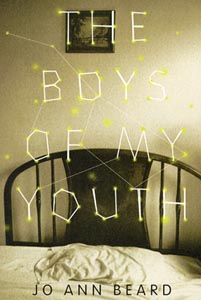
(Reward for safe return. No questions asked.)
Subscribe to:
Posts (Atom)