Some years ago I read an article about interior design and bookshelves. It included some photographs of Bret Easton Ellis' bookshelves. Or, rather, his shelf: one long shelf running like a snake around the circumference of his fabulous loft. I was inspired. I'm not neat or organized enough to be a bibliophile, but I do like books as objects almost as much as I like them as texts. Those affections are sometimes in tension. Case in point was my decision to do Ellis one better by organizing my books by color. The problem, of course, was that if I wanted to find my copy of, say, Roy Mottahedeh's The Mantle of the Prophet, I had to remember not only that its spine is red but that my copy is a bit faded, the red fading to the color of old salmon, so that I'd shelved the book closer to orange than to violet. Then, too, there is the dominance of Penguin orange; and the problem of books such as Borges' Collected Fictions, the bottom half of which is a dusty twilight blue and the top half of which is a milk chocolate brown. I could picture the spine, but not its location. So my experiment failed. Fortunately, Sean and Lisa Blonder Ohlenkamp have not:
Friday, February 25, 2011
Tuesday, February 8, 2011
Books I Re-Read, Often
For some extra material at the back of the paperback edition of my 2010 book C Street, my publisher, Little, Brown, asked me for a list of six or eight nonfiction books that shape my writing, with a few sentences for each. I like it when my publisher asks me to make lists. Here's mine, with some usual suspects and some titles that surprised even me when I sat down to really think about the books that shadow me when I'm writing. Some of these are favorites, some are books that just stick around. I recommend every one of them.
The Robber Barons, by Matthew Josephson (1934). An early 20th century example of muckraking as scripture. Like many of his contemporaries, Josephson wanted to write about the bastards who’d ripped off a nation; but unlike less imaginative writers, he fell in love with his subjects, and the result is this Dante-eque tour of the history of American greed by a writer who knows that Hell is more interesting than Heaven.
Let Us Now Praise Famous Men, by James Agee and Walker Evans (1941). This is an attempt to document the "cruel radiance of what is," as Agee put it, that all others should be measured against. And all others fail -- as did Agee, and, to a lesser extent, photographer Evans. And still I re-read this great, failed experiment over and over through the years, with caution and awe.
Blues for Cannibals: The Notes from Underground, by Charles Bowden (2002). I used to assign this to my students, but it infuriated 2/3 of every semester’s class. It’s hard going, dense, circular, occasionally overwrought, and absolutely brilliant. Makes the phrase “dark lyricism” meaningful. Sort of like James Agee’s best work: study it, but beware of trying it at home.
Slouching Towards Bethlehem, by Joan Didion (1968). When I first read this, at age 18, I wanted to wear giant Joan Didion sunglasses and have migraines. Then I figured out that all I wanted from Didion were her sentences. Now that I’m older and I have my own, imperfect sentences, what I admire is Didion’s power of perception, the nearly flawless double vision that allowed her to see a society in crisis and at the same time to see herself, watching it crumble.
The Robber Barons, by Matthew Josephson (1934). An early 20th century example of muckraking as scripture. Like many of his contemporaries, Josephson wanted to write about the bastards who’d ripped off a nation; but unlike less imaginative writers, he fell in love with his subjects, and the result is this Dante-eque tour of the history of American greed by a writer who knows that Hell is more interesting than Heaven.
The Dybbuk, or Between Two World, by S. Ansky (1914). This Yiddish play, which I first read in an English version by the great translator Joachim Neugroschel and later saw in an adaptation by one of my favorite playwrights, Tony Kushner, is not, technically, nonfiction. But Ansky approached it as if it was, scouring the folklore of Eastern European Jews for decades to create this uncanny distillation of a world of belief. The story, of a possession, is simple and yet irreducibly complex; I find myself thinking about it often when writing about religion. Kushner’s Angels in America: A Gay Fantasia on National Themes is equally essential to me.
The Maine Woods, by Henry David Thoreau (1864). I’m no great fan of Thoreau’s self-enamored prose, but this book’s account of his ascent up Mt. Ktaadn and his discovery, close to its peak, that the world is vastly more complex and beautifully dangerous than his imagination could conceive—“Contact! Contact!” he nearly screams in terror—is, to me, the beginning of American literary journalism.
The Journalist and the Murderer, by Janet Malcolm (1990). Maybe this book should have marked the end of American literary journalism. Its brief story—of a dispute between the murderer of its title and the journalist who tried to tell his story—is a vehicle for Malcolm’s condemnation of the genre she practices as something akin to ritual sacrifice. I read it, assign it, and think about it every time I start a new story.
Lipstick Traces, by Greil Marcus (1990). I’ve never read this book straight through, and I don’t care about its ostensible subject, the Sex Pistols, but I always keep it close at hand. It’s a masterwork of pattern and digression, an almost too-hip monstrosity of hybrid prose that I nonetheless find bracingly hopeful: a commonplace book of strange dignity, “the ability,” writes my favorite theological thinker, “to contradict what is.”

Monday, January 17, 2011
Borders, Henrietta, New York, 2009
Borders is dying. I'd like to add one more tack to its cardboard coffin. The worst Borders I've encountered -- and since I often travel to small cities without many bookstores, I've been to a lot -- was in Henrietta, NY, an upscale suburb outside of Rochester. To the best of my knowledge, there are no more independent new bookstores in the Rochester area. Borders has taken over a metro area of 1 million people and slowly deprived it of books. The Henrietta store was a case in point. I went in to pick up a copy of The Paris Review. No copies. Sold out? No, said the clerk, they didn't carry that "magazine." Curious, I went back to the lit journal section. What did they carry? Alaska Quarterly Review. Antioch Review. Bellevue Review. Callaloo. Denver Quarterly. Detect a pattern? That's right -- they'd ordered literary journals by picking randomly, A, B, C. I don't think they got further than F.
I asked to speak to a manager. She met me between the fancy chocolate counter and the comic book rack. I asked if she might consider ordering The Paris Review. No, she said, smiling, they had a good selection of "story magazines" already. Look, I said, I'm not really a fan of The Paris Review myself, but it's part of the landscape. Skipping it in a lit journal section would be like skipping Faulkner in the fiction section. Love him or hate him, you gotta have him. She smiled and said nothing. "Faulkner?" I said again, testing.
"Would you like to look that author up?" she asked.
Don't bother, I said. I bought the latest Astonishing X-Men and left.
Borders didn't like books, and book buyers didn't like Borders. I'd say good riddance, but the sad fact is that with its death a lot of people will lose even the chance to buy X-Men and Twilight. What's left?
I asked to speak to a manager. She met me between the fancy chocolate counter and the comic book rack. I asked if she might consider ordering The Paris Review. No, she said, smiling, they had a good selection of "story magazines" already. Look, I said, I'm not really a fan of The Paris Review myself, but it's part of the landscape. Skipping it in a lit journal section would be like skipping Faulkner in the fiction section. Love him or hate him, you gotta have him. She smiled and said nothing. "Faulkner?" I said again, testing.
"Would you like to look that author up?" she asked.
Don't bother, I said. I bought the latest Astonishing X-Men and left.
Borders didn't like books, and book buyers didn't like Borders. I'd say good riddance, but the sad fact is that with its death a lot of people will lose even the chance to buy X-Men and Twilight. What's left?
Wednesday, January 5, 2011
Suffolk County Tourist Board, "Icon Survey," 2011
 |
| Awesomer than a swimming pool. |
 , to be published in August, features a very short passage on death metal rockers Cradle of Filth. So I was excited to see them break out of the death metal ghetto this morning and break into international "news" via Gawker.com, which reports that lead singer Dani Filth was the surprise winner -- ahead of Brian Eno! -- of a poll by the tourist board of Suffolk County, England, to determine the county's greatest icon. Second place went not to Eno but to a swimming pool. The tourist board was not amused; they've apparently called for a recount.
But as pleasant as it always is to hear news of everyday people rejecting the drive to sanitize and homogenize culture, Dani Filth may not be the best representation of rebellion. I wrote about Cradle of Filth in the context of a story about Clear Channel, the giant media monopoly. I'd gone to Denver to meet Jesse Morreale an independent concert promoter being driven out of business by Clear Channel, but since he was entangled with a lawsuit over the matter, he couldn't give me any particulars.
Nor would the minor rock stars who came through town while I was there. Morreale took me to shows by arena rockers, alt-country crooners, and bands so bland that they could not be classified. The best was that of Cradle of Filth, a death-metal band from England with a cult following. The show featured a trapeze, lots of sparks, and a stilt walker dressed as a giant lobster; the band, dressed in leather bondage gear, sounded awesomely like a car running out of oil crashing into a lawnmower grinding up gravel. But afterward, on the tour bus, the lead singer assured me that he would "never" say anything against Clear Channel; he hoped his loyalty would be rewarded with a radio hit.
Oh, well. Maybe that swimming pool deserves another look.
Monday, January 3, 2011
Peter Trachtenberg, The Book of Calamities, 2008
An inquiry from my friend Melvin Bukiet, about a contact for the writer Peter Trachtenberg, prompted me to dig up my review of Peter's The Book of Calamities, one of my favorite books of recent years. I reviewed it for Search, a now-defunct magazine without an online archive. Much, much worse than that is the fact that Peter's publisher, Little, Brown, never brought The Book of Calamities out in paperback, despite reviews nearly all as admiring as mine, a number of awards, and sales that, if modest, were within the range of what publishers used to expect of "serious" books. Nothing I can do about publishing's determination to strangle itself, but here's the review. Buy the book in hardcover.
 |
| Peter Trachtenberg |
The ordinary history of Christianity – not the wars fought in its name or the popes and martyrs and televangelists who bob along near the crest of its waves, but the faith as it is found and lost by everyday people – is rife with instances of what might be called “scripture shock.” Abigail Hutchinson, a subject of Jonathan Edwards’ “experimental religion” during the Great Awakening of the 18th century, described such an experience for Edwards’ notebooks. Determined to work out the matter of her salvation, she plowed through the Bible as quickly as she could, racing from disobedience to flood to murder to the shame of a naked father, a banished mother, lovers speared like roaches, cities slaughtered, locusts, boils. Too much scripture, too fast. Abigail Hutchinson collapsed; she died not long after.
It’s usually not so bad. In Fort Riley in Kansas, I met three young Iraq veterans who described episodes of scripture shock of their own; but they considered it a successful treatment for an illness they called belief. For one man, a medic raised a fundamentalist Christian, it was a particularly bloody passage of the Book of Numbers that he studied before entering the Army that overloaded him. He became an atheist. His two friends, one a lapsed Catholic, the other a North Carolinian who’d joined to fight holy war against Islam, reported similar epiphanies of disbelief in response to close and rapid reading of scripture in a war zone.
Death and disbelief are only two of the possible outcomes. A third, by far the most common, is unquestioning belief. Scripture can drown doubt. All suffering begins to look the same; some simply call it sin, and declare themselves its enemies, a response every bit as reasonable, if reductionist, as the madness of Pip, the stow-away on Melville’s Pequod who loses his mind after falling overboard and treading water in a vast, blank sea for hours before rescue.
Peter Trachtenberg’s terrifying and wondrous Book of Calamities, if consumed too quickly, might induce similar responses. (Disclosure: Peter Manseau, the editor of Search, and I published an early draft of a section of the first chapter in a book called Killing the Buddha.) There are more painful chronicles – anthologies of lynching, compilations of genocidal documents, black books of the Holocaust – but few that hurt on so many registers, from the mundane to the inconceivable, the personal to the political, the absurd to the outrageous to the stupid to the sad. A partial inventory: a friend with cancer; the author as junky; the Book of Job; the dead of 9/11; a martyr and a lion; Rwanda; the Holocaust; twins befriended by Trachtenberg who are afflicted by a disease that flays them alive, over and over, for 27 years; Vietnam vets trapped in their own stories; victims of AIDS in Calcutta, trapped in Mother Theresa’s; another friend of the author, his head stuck in a plastic bag.
And yet, The Book of Calamities never wallows. Trachtenberg is as humble as he is nimble, and both qualities are prerequisites for his inquiry—or rather, set of inquiries, since the book is framed as “Five Questions about Suffering and Its Meanings.” It might as easily have been subtitled “Five Hypotheses,” since in each chapter Trachtenberg not only addresses a different facet of suffering but also a variation on religion’s or philosophy’s or law’s responses, drawing on Gilgamesh, Boethius, Buddha, Simone Weil, and many others, always respectfully, never conclusively. “This book is an investigation of the ways people find meaning in suffering,” he writes, “or try not to be driven mad by the possibility that it means nothing.” He allows that possibility: “Suffering may not inherently mean anything, but I believe that giving it meaning is the only way people can escape being ultimately destroyed by it.” The rest of the book might be summed up in three words: Or maybe not.
This is The Book of Calamities’ remarkable achievement: to the shock of suffering, Trachtenberg responds with a masterful collage of personal narrative, journalism, biblical criticism, and layman’s philosophy that gently and subtly guides the reader past both unbelief and certainty. That’s not as easy as it sounds, for they’re represented in The Book of Calamities by, among others, Buddha and Mother Theresa, respectively, and Trachtenberg gives them their due. He wants us to understand them and appreciate them as best we can, but when their traditions, their hypotheses, turn away from or euphemize or gloss any suffering at all – Thich Nhat Hahn fails to connect with a group of broken Vietnam vets at a Buddhist retreat, Mother Theresa’s Missionaries of Charity, swept away by the beauty of suffering, fail to provide painkillers –Trachtenberg collects that data, too, and weighs it.
“Before suffering people can form a coherent picture of their suffering,” he writes, “they must first ask questions about it, or maybe of it. In doing so, they are performing the work of science and philosophy, interrogating their reality in order to derive a thesis about it.” But those who suffer are at a disadvantage, he continues. “They pose their questions in the silence of a hospital room or the murmuring heat of a refugee camp, in a house where someone has died; his clothes still hang in the closet, bearing a trace of his smell.” So Trachtenberg, a man who despite years of drug addiction, overdoses, and a suicide attempt does not believe he has suffered much on the scale of things, joins them in their questioning, adding to their urgency his privileged calm.
The first question is the simplest: “Why me?” In Trachtenberg’s hands, though, it becomes: Why not me? Why her? The her is his friend Linda, dead of cancer. Long before that that, though, she was “a beautiful young woman with translucent olive skin and the eyes of a Sienese Madonna.” A saint and a genius, according to Trachtenberg’s memory, her virtues disguised by her day job as a functionary at an arts nonprofit with Trachtenberg. “Like practically everybody else in our office, she wrote poems, but hers weren’t about her genitals or her feelings. They were about the Heisenberg uncertainty principle, and they were sestinas.” Trachtenberg, meanwhile, is a disaster, a spoiled middle class kid who thinks suffering is a synonym for thrills and who finds both in a syringe. He buys drugs, gets mugged, buys more drugs, squirts blood in other people’s homes, buys more drugs, tries to kill himself with 50 fiornal and a razor blade, and fails, partly because Linda saves him.
In his memory, she miraculously intuits his condition and spirits him off to a hospital. Then, later, she becomes ill, first with an sickness that bloats her grotesquely, then with an even worse one that wastes her to the bone. There is an inverted logic to this, an answer to the chapter’s question. Why her? Because she took his suffering onto herself. Because only the good die young. Because fate loves irony. Because God tests those who can bear it. Phrased so glibly, such explanations are horrifying. And yet, they’re rooted in the rational impulse, the search for causality that has long prompted interpreters of the Book of Job, an account of which Trachtenberg splices with Linda’s story, to look for justice within Job’s suffering. “Order,” Trachtenberg writes, “is the nest we make for our minds.”
But it may not be reality. The last time he sees Linda before her death they reminisce about the early years of his friendship, including her almost-magical rescue of him. “Linda stopped me. ‘That’s not what happened,’ she said.” There had been no miracles. Trachtenberg had called her and told her what he’d done, a detail he’d erased. And they hadn’t been close, then, either. In fact, she’d always wondered, “Why me?” There is no answer: “I couldn’t say why I’d chosen her. I couldn’t say why she’d been chosen.”
Randomness is not the end, however. Order may be a fiction, but in Trachtenberg’s telling it’s a necessary story. The centerpiece of the book is a long chapter on Rwanda’s attempts to reckon with murder on a scale that makes the Nazis look like a few bad apples. There were no death camps in Rwanda, only people. Some of them were killed; most of them were killers. But the question of who was a victim isn’t so simple. The Tutsis, no doubt; but what of the genocidaires, herded by cowardice and chance into horrible crimes? Trachtenberg juxtaposes his interviews with Rwandans with the story of Andrea Yates, who in 2001 drowned her five children in a bathtub, believing she was saving them, and of Oedipus, who truly knew not what he did. The thread between them is fate, one of the Book of Calamities’ hypotheses about suffering. “If I was created so, born to this fate,” Trachtenberg quotes Oedipus, “Who could deny the savagery of God?” Fate is not, in this reading, destiny, but a thicker, more complicated term for circumstance.
“This isn’t to say that fate eliminates guilt,” writes Trachtenberg. “But it makes possible a more nuanced vision of human responsibility, allowing one to see it as an intricate bitmap of freedom and unfreedom in which there are many shades of doubt and pity.” Which is to say, fate reveals a spectrum; Trachtenberg’s quasi-scientific method of inquiry has brought him around to a theory of relativity. Against it, he weighs justice. “What all justice does,” he writes, “however cruelly or inequitably, is to impose order on the pandemonium of acts.”
From order to chaos to fate to order: Trachtenberg’s story seems circular, but in fact it winds inward. The most moving story in the book uses Buddhism, martyrdom, and the trauma of Vietnam to reflect on the story of Kelly and Kate Daley, twins born with recessive dystrophic epidermolysis bullosa, an extremely rare skin disease the effects of which are like “being burned every day of one’s life.” The affliction of the twins is unimaginable; Trachtenberg doesn’t really ask us to try. Instead, he wants us to understand their courage, as manifested most clearly in their wit – they’re bright, funny, honest women, people with whom any reader would want to be friends. The point of the story isn’t inspiration, however; the twins die horrible deaths at age 27. It’s witness. Another word for that is martyr; and yet another, Trachtenberg suggests, is bodhisattva, an “awakened being,” according to Buddhism, who sacrifices the reward of nirvana in order to stay with the rest of us as witness to our suffering. In one sense, that’s what the Daley twins desperately need: a witness. They wanted to be seen, both their suffering and their humanity recognized. In another sense, they were witnesses: they stayed in this world, living longer and fuller lives than almost anyone else with their disease. They did not die for the truth, they lived for it. And the truth was that of suffering. This is neither belief nor unbelief, it’s simply fact, the antidote to the inevitable shock of calamity.
Trachtenberg never makes suffering beautiful, but his prose is often lovely, as when he writes of the view from a suicide’s room, “the vast shining loneliness of the Hudson and the immense sky filled with light.” When he thinks we can bear it, the book is even funny. No gags, just an appreciation for the humor that attends suffering, as when Kelly Daley – forbidden from eating even toast, lest it scrape away her throat’s membrane – tells him she lusts for foie gras. “ ‘I’m a wistful hedonist. If I was healed, I’m afraid I’d be totally into the pleasures of the flesh.’ ”
The same may be true of Trachtenberg. He writes most vividly not of horror but of the delight he takes in the people he comes to care for, the twins, Linda, a painter in the final chapter. He sees not just their suffering, but also their brilliance, and it’s that reflected light that makes this darkest of studies itself a kind of witness, a profound book of heart stopping stories and even more powerful questions. This is a rare and invaluable kind of writing, almost scriptural in its scope and its openness to pain. I say “almost,” because The Book of Calamities is both less and more than the scripture from which it borrows much of its form. Trachtenberg offers no answers and doesn’t seem certain there are any. And yet that’s a blessing, a recognition that there is a limit to witness – which means that there may be a limit to suffering, too.
Saturday, January 1, 2011
New Year New Music.
New music for the new year. Bought three albums today: The ArchAndroid, by Janelle Monae; Sweet Warrior, by Richard Thompson; and Far, by Regina Spektor. Reactions tk.
Friday, December 17, 2010
David Shields, Reality Hunger 2010, pt. 2
A continuation of my responses to David Shields' assemblage of numbered quotations on nonfiction as a question, Reality Hunger: A Manifesto.
#73 Shields or an unidentified source writes in rebellion against the niche marketing of Hollywood movies, comparing his preference to a dinner party at which he and his guests together will serve tacos, cordon bleu, and "perhaps some Japanese food as well. I want to mix it all together, because I think that's what life is like."
My response: Shields and those he approves of spend so much time doing things because they think "that's what life is like." Don't they know? Is their only access to life through their reproduction of it as an idealized pastiche of pop cosmopolitanism? Are they conflating life and commercial media?
#74 Cyberpunk novelist William Gibson, writing in Wired, plays the part of a 19th century railroad booster on behalf of the internet, declaring it "the opposite of broadcast... with as many senders as receivers." Well, that's just not true, but it's hard to hold Gibson responsible for such misinformation without knowing when he wrote it. Which we don't, because Shields, angry about being forced to source anything, fails to include dates in his begrudging citations. Maybe "because that's what life is like" -- if life, for you, is comprised of nothing but wit and irony. Gibson, whose fiction is more than that, offers even less in his attack on citation: "The citation of sources belongs to the realms of journalism and scholarship, not art." So once again these brave pioneers of genre crossing insist on the preserving the gated sanctuary of "art," into which the genres they raid are never to be allowed entry, lest art's purity be sullied. Which is to say: Lurking beyond all this pop art piracy is the same old regime of fauxhemian capitalism the would-be pirates say they're decrying. "Reality can't be copyrighted," concludes Gibson; it's worth noting, though, that his novels are. I suppose that's the kind of quibble Gibson might dismiss as pedantry akin to citation; I think it's just reality, no more, no less.
#78 The old regime resurrects another one of its dearest ideas, dressed up in the drag of techgnosis: "It's important for the writer to be cognizant of the marginalization of literature by more technologically sophisticated and more visceral narrative forms," argues an unidentified writer who may or may not be Shields.* "You can work in these forms or use them or write about them or through them, but I don't think it's a very good idea to go on writing in a vacuum. Culture, like science, moves forward. Art evolves."
Only if you're a social darwinist. Implicit in this statement is the idea that art is a form of progress, that it "moves forward" -- that art is, by definition, a social good. But there's no suggestion in Reality Hunger that Shields or those he subsumes into his manifesto believe that all art is a social good. Indeed, most use "art" as a term to indicate that which they believe "evolves," that which serves the greater good of social darwinism. I suspect Shields would strongly reject this notion, as I've rephrased it. Hence, I'd argue, the veil of "art" drawn between genres even as these writers declare their own transgressions.
* Eager to evolve, I turned to a "more technologically sophisticated" form of citation, Google. This remark from Reality Hunger is widely cited, and usually sourced to Shields, himself.
#73 Shields or an unidentified source writes in rebellion against the niche marketing of Hollywood movies, comparing his preference to a dinner party at which he and his guests together will serve tacos, cordon bleu, and "perhaps some Japanese food as well. I want to mix it all together, because I think that's what life is like."
My response: Shields and those he approves of spend so much time doing things because they think "that's what life is like." Don't they know? Is their only access to life through their reproduction of it as an idealized pastiche of pop cosmopolitanism? Are they conflating life and commercial media?
#74 Cyberpunk novelist William Gibson, writing in Wired, plays the part of a 19th century railroad booster on behalf of the internet, declaring it "the opposite of broadcast... with as many senders as receivers." Well, that's just not true, but it's hard to hold Gibson responsible for such misinformation without knowing when he wrote it. Which we don't, because Shields, angry about being forced to source anything, fails to include dates in his begrudging citations. Maybe "because that's what life is like" -- if life, for you, is comprised of nothing but wit and irony. Gibson, whose fiction is more than that, offers even less in his attack on citation: "The citation of sources belongs to the realms of journalism and scholarship, not art." So once again these brave pioneers of genre crossing insist on the preserving the gated sanctuary of "art," into which the genres they raid are never to be allowed entry, lest art's purity be sullied. Which is to say: Lurking beyond all this pop art piracy is the same old regime of fauxhemian capitalism the would-be pirates say they're decrying. "Reality can't be copyrighted," concludes Gibson; it's worth noting, though, that his novels are. I suppose that's the kind of quibble Gibson might dismiss as pedantry akin to citation; I think it's just reality, no more, no less.
#78 The old regime resurrects another one of its dearest ideas, dressed up in the drag of techgnosis: "It's important for the writer to be cognizant of the marginalization of literature by more technologically sophisticated and more visceral narrative forms," argues an unidentified writer who may or may not be Shields.* "You can work in these forms or use them or write about them or through them, but I don't think it's a very good idea to go on writing in a vacuum. Culture, like science, moves forward. Art evolves."
Only if you're a social darwinist. Implicit in this statement is the idea that art is a form of progress, that it "moves forward" -- that art is, by definition, a social good. But there's no suggestion in Reality Hunger that Shields or those he subsumes into his manifesto believe that all art is a social good. Indeed, most use "art" as a term to indicate that which they believe "evolves," that which serves the greater good of social darwinism. I suspect Shields would strongly reject this notion, as I've rephrased it. Hence, I'd argue, the veil of "art" drawn between genres even as these writers declare their own transgressions.
* Eager to evolve, I turned to a "more technologically sophisticated" form of citation, Google. This remark from Reality Hunger is widely cited, and usually sourced to Shields, himself.
Thursday, December 16, 2010
David Shields, Reality Hunger, 2010; Milton Rogovin, Portraits in Steel, 1993
I've been slowly reading David Shields' recent book Reality Hunger: A Manifesto for awhile now. I'm not sure if I recommend it -- I keep reading out of annoyance as much as pleasure. I've decided to try blogging it, a reasonable response, I think, to a book that is comprised of 618 numbered quotations related to the question of fiction vs. nonfiction. Or maybe simply fiction/nonfiction. I'm sympathetic to the not-very-new idea that it's difficult to draw a sharp line between genres, and I'm grateful for many of Shields' selections, but I'm bored by the book's cleverness (the quotations are only identified in an index he says his publisher forced him to include) and dismayed by the tired old conventional wisdom of "art" masquerading as genre-bending transgression.
But I can't stop reading. So I'm going to start taking notes on the the entries I find most provocative, starting with #45*:
#47** galls me for a similar reason.
But thinking on it now, I realize I'm disqualified from judging this commentary, since I don't believe there can be a "useful definition of artistic greatness." Such a definition isn't very useful, since it can only be definitive in the cliquish imagination of those who accept it. "Imagination" is perhaps too generous a word for those who cannot conceive of art beyond the world in which Rothko looms large. Poor Rothko; held captive by little minds for which size really matters.
#62*** concerns Brian Fawcett's Cambodia: A Book for People Who Find Television Too Slow, which, in my youth, was a book for young men who wanted young women to know that the A&P -- that'd be Art and Politics, capitalized -- left them no time for anything less than maximum sexual and romantic intensity. Nonetheless, Fawcett can't be blamed for this remark about his book, in which the top two thirds the pages are filled with fiction about media consumption and the bottom third features an essay on the Cambodian genocide:
See, that's the great thing about insisting on no distinctions between fiction and nonfiction: you're free to draw on both in the service of literal idiocy at once.
#65****, on the preferred genre label of these bold pioneers, the "lyric essay":
#72***** More on the lyric essay.

Pretty, no? Get that bit in the center, where the nameless worker looks almost like he's on a cross?
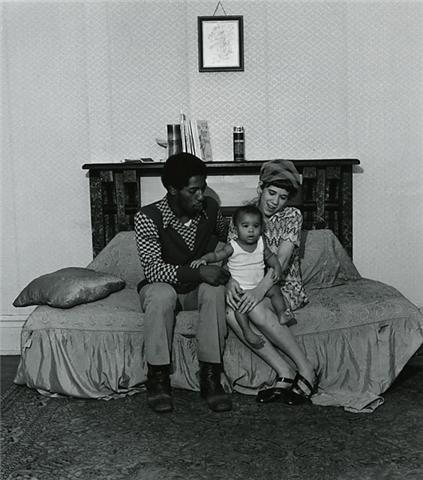
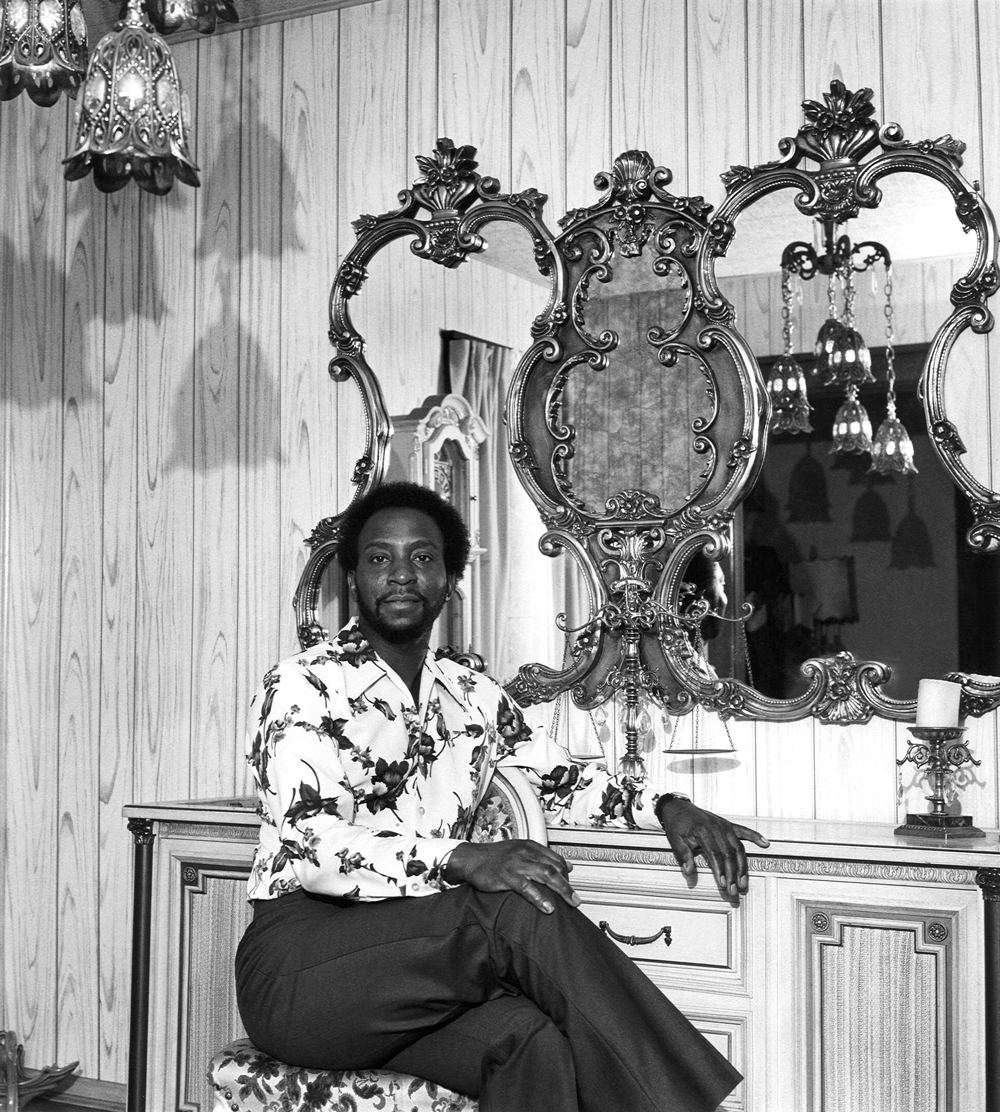
Rogovin, who recently turned 100, has been taking pictures in his adopted hometown of Buffalo, New York, since 1942. My favorite book of his is Portraits in Steel, images of steelworkers whom he has come to know over decades. Each is photographed at home and at work, and many are interviewed, as well. The steelworkers collaborate in their portraiture, especially at home, where many pose with favorite items. Yes, they "pose," but there is nothing artificial about the process. Each pose, for that matter, might be considered a form of reportage, on the part of the worker, and of observation, on the part of Rogovin, more truthful than the capture of brutal elegance on display in Selgado. Here is a sample that gives only a limited sense, since most of these images are stripped of their companions and their identifying details. Even so:


* Shields thinks citations are a distraction from Art. I don't, but I've tried to give his book a fair shake by commenting on his commentaries without immediately identifying their source, as his wish. In the index required by his publisher, he provides some scant bibliographical data, with the caveat that he "forgot" some it "along the way." Shields suggests you cut all of it out of the book. He presents this notion as a rebellion against the ownership of art (why, then, attach his name to the book at all?), but it strikes me more as an evasion of the specificity he seems to believe would reduce his Art to the lowly status of information. Here, then, is as much information as he could bring himself to provide: #45 is taken from Lorraine Adams, "Almost Famous: The Rise of the 'Nobody' Memoir,"Washington Monthly. Shields doesn't include such trivia as dates, for what hath Time to do with Art?
**The source of #47, on Rothko, is unidentified.
***Likewise #62. Just as well. The asshole who thought it witty to equate big media with actual murder is probably left unnamed.
****I was wrong. The source for #65 is Ben Marcus, "The Genre Artist," The Believer.
*****The source for #72 is lyric essayist John D'Agata, though Shields doesn't distinguish whether this quote is from D'Agata's anthology, The New Essay, or from Shields' conversations with him, also mentioned as a source. I happen to be reading D'Agata's About a Mountain right now, too, which has raised some related questions I'll have to blog tomorrow or the next day, after I've moved on to the passages from Reality Hunger about which I have sweeter things to say.
But I can't stop reading. So I'm going to start taking notes on the the entries I find most provocative, starting with #45*:
"After Freud, after Einstein, the novel retreated from narrative, poetry retreated from rhyme, and art retreated from the representational into the abstract." In the margin I wrote, "glib & false." What bothers me in this statement, representative of a tone throughout the book, is the definite article: "the novel."Such grandiose statements remind me of the singularity with which some fundamentalists speak of gay people: "the gay man," as Pastor Ted Haggard used to say, before his regular male escort outed him as one. For Ted, the definite article elevated his enemy; for champions of the novel, the definite article elevates their sense of themselves as at the center of the only conversation about fiction worth having. The novel doesn't exist; only novels, many of which remained firmly committed to narrative.
#47** galls me for a similar reason.
"I listened to a tour guide at the National Gal'ery ask his group what made Rothko great. [Various possibilities follow.] The tour guide said 'Rothko is great because he forced artists who came after him to change how they thought about painting.' This is the single most useful definition of artistic greatness I've ever encountered."To which I responded in the margin: Each entry sillier than the last. Their problem is the distraction of "great."
But thinking on it now, I realize I'm disqualified from judging this commentary, since I don't believe there can be a "useful definition of artistic greatness." Such a definition isn't very useful, since it can only be definitive in the cliquish imagination of those who accept it. "Imagination" is perhaps too generous a word for those who cannot conceive of art beyond the world in which Rothko looms large. Poor Rothko; held captive by little minds for which size really matters.
#62*** concerns Brian Fawcett's Cambodia: A Book for People Who Find Television Too Slow, which, in my youth, was a book for young men who wanted young women to know that the A&P -- that'd be Art and Politics, capitalized -- left them no time for anything less than maximum sexual and romantic intensity. Nonetheless, Fawcett can't be blamed for this remark about his book, in which the top two thirds the pages are filled with fiction about media consumption and the bottom third features an essay on the Cambodian genocide:
"The effect of the bifurcated page is to confront the reader with Fawcett's point: wall-to-wall media represent as thorough a raid on individual memory as the Khmer Rouge."Why stop there? How about: "TV, lacking greatness, represents as thorough a destruction of humanity as Auschwitz." Or: "Pop stars who aren't quite trashy enough for me to celebrate ironically represent as complete an assault on our ears as the machetes of the Rwandan genocidaires."
See, that's the great thing about insisting on no distinctions between fiction and nonfiction: you're free to draw on both in the service of literal idiocy at once.
#65****, on the preferred genre label of these bold pioneers, the "lyric essay":
"In fiction, lyricism can look like an evasion, special pleading, pretension. In the essay, it's apparently artistic, a lovely sideshow to The Real, that, if you let it, will enhance what you think you know."I believe this is from an advertisement for a penis pump called The Real.
#72***** More on the lyric essay.
"What happens when statistics, reportage, and observation in an essay are abandoned for image, emotion, expressive transformation?"The short answer, of course, is easy: kitsch. But I'm also reminded of a comparison my friend JoAnn Wypijewski once drew between the photographs of Milton Rogovin and Sebastio Selgado, both of whom set out to document the lives of workers. Selgado's work looks like fashion photography: it is lush, beautiful, lyric -- "a lovely sideshow to The Real, that, if you let it, will enhance what you think you know."

Pretty, no? Get that bit in the center, where the nameless worker looks almost like he's on a cross?
Rogovin, who recently turned 100, has been taking pictures in his adopted hometown of Buffalo, New York, since 1942. My favorite book of his is Portraits in Steel, images of steelworkers whom he has come to know over decades. Each is photographed at home and at work, and many are interviewed, as well. The steelworkers collaborate in their portraiture, especially at home, where many pose with favorite items. Yes, they "pose," but there is nothing artificial about the process. Each pose, for that matter, might be considered a form of reportage, on the part of the worker, and of observation, on the part of Rogovin, more truthful than the capture of brutal elegance on display in Selgado. Here is a sample that gives only a limited sense, since most of these images are stripped of their companions and their identifying details. Even so:




* Shields thinks citations are a distraction from Art. I don't, but I've tried to give his book a fair shake by commenting on his commentaries without immediately identifying their source, as his wish. In the index required by his publisher, he provides some scant bibliographical data, with the caveat that he "forgot" some it "along the way." Shields suggests you cut all of it out of the book. He presents this notion as a rebellion against the ownership of art (why, then, attach his name to the book at all?), but it strikes me more as an evasion of the specificity he seems to believe would reduce his Art to the lowly status of information. Here, then, is as much information as he could bring himself to provide: #45 is taken from Lorraine Adams, "Almost Famous: The Rise of the 'Nobody' Memoir,"Washington Monthly. Shields doesn't include such trivia as dates, for what hath Time to do with Art?
**The source of #47, on Rothko, is unidentified.
***Likewise #62. Just as well. The asshole who thought it witty to equate big media with actual murder is probably left unnamed.
****I was wrong. The source for #65 is Ben Marcus, "The Genre Artist," The Believer.
*****The source for #72 is lyric essayist John D'Agata, though Shields doesn't distinguish whether this quote is from D'Agata's anthology, The New Essay, or from Shields' conversations with him, also mentioned as a source. I happen to be reading D'Agata's About a Mountain right now, too, which has raised some related questions I'll have to blog tomorrow or the next day, after I've moved on to the passages from Reality Hunger about which I have sweeter things to say.
The Falls Church (Anglican), 2010
About a month ago I posted a strange bit of spam I received that seemed connected to my work on the Family and a very conservative, and very influential, church to which it has ties, The Falls Church (Anglican). Falls Church isn't what most people think of when they think fundamentalism -- it's old, it's upper crust, and its membership includes some genuine elites -- Fred Barnes of the Weekly Standard, Tucker Carlson, former Bush speechwriter Michael Gerson, former CIA director Porter Goss, Rep. Robert Aderholt (a Republican Family man from Alabama), and others. Here's a 2004 portrait by liberal evangelical writer Ayelish McGarvey, "Evangelical Elitists," written before Falls Church broke away from the Episcopal Church USA, which it viewed as too tolerant of homosexuality.
No real news. Just the arrival, this evening, of a pungent little defense of Falls Church, a response to my small critique.
"You typical demonizing Jew."
This is, I believe, what the Falls Church Anglican schismatics call "traditionalism."
No real news. Just the arrival, this evening, of a pungent little defense of Falls Church, a response to my small critique.
"You typical demonizing Jew."
This is, I believe, what the Falls Church Anglican schismatics call "traditionalism."
Saturday, December 11, 2010
Style Sheet, 2010
After four books, I've a good sense of what I like and don't like about publishing. What I like is writing the book. What I don't like is publication. The best part of the latter process, I've come to think, is the style sheet. This is a document prepared by the copy editor to let the author know how the publisher spells or presents terms about which there might be some debate. It reads like a grocery list from the author's subconscious, the particularity of the author's interests stripped of sentence and story, laid bare without meaning. It's organized alphabetically. Here are my favorite letter lists from the style sheet I just received for my next book, Sweet Heaven When I Die, coming from W.W. Norton in August 2011:
A
Afrobeat
Aijalon
alef (Yiddish)
al-Qaeda
American Top 40
anti-utopian
Acquire the Fire
Arapaho
F
facefirst
fake-whisper
federal
feng shui-ers
filth-punk
G
Garden (for MSG)
gelt
Geimende aud dem Weg
Gibeon
giml
Golden Arches
Goth
Gott
goyish, goyishe
Ground Zero
H
halfsies (n.)
Hanukkah
Harold and Maude
head shots
hell house (n.)
hell-house (adj. before n.)
Herr
hip-hop
hip-huggers
holy-spirit (adj. before n.)
homeschool (v.)
J
Judenrat
jujitsu
K
kairos
KISS (band)
kumbaya
W
Walmart (no hyphen since 08)
Western (for movies, books, and “attitudes,” etc.)
Western Edge
West Texas
wolfangel (1 word)
woodstove
Z
Zapatista
Subscribe to:
Posts (Atom)